Kate Talbot Solutions in Hometown Connections
Kate Talbot:
Solutions in Hometown Connections
Leading with welcome.
How Kate Talbot and Solutions in Hometown Connections are building connections and confidence for mothers navigating a whole new world.
“Our communities are better when everyone has a chance to participate.”
Standing outside an apartment door in Prince George’s County, Kate Talbot remembers thinking: “This is either going to be the end of me or the beginning of me.”
On the other side of that door was Farida, an Afghan refugee who was recently resettled in Maryland with her seven children. Her husband had worked with U.S. Special Operations in Afghanistan, and that work eventually uprooted Farida from her family, friends, and everything familiar. She wasn’t literate in English or Dari, her native language. Now she found herself navigating a new country, caring for young children in a world she did not yet understand.
Kate was there to tutor Farida in English, and that knock on the door turned out to be a beautiful beginning.
Seeing what was missing
Kate developed a powerful relationship with Farida over the 18 months they spent learning from each other. She came to understand the many layers of isolation Farida was experiencing in her new environment – especially as a mother with very young children who didn’t yet attend school.
In speaking with other volunteers, Kate came to realize that Farida was special, but her circumstances were not unique. There were thousands of smart, capable women facing similar challenges as newcomers to the United States.
Refugee resettlement agencies provided some support, but the needs of mothers were often overlooked. Programs generally weren’t arranged for parents who needed to bring young children, or they didn’t have curricula designed for pre-literate students.
Kate knew she could do more to help, so she partnered with Merritt Groeschel, a fellow volunteer tutor. Together, they were determined to reach more women in need of welcome.
Meeting women where they are
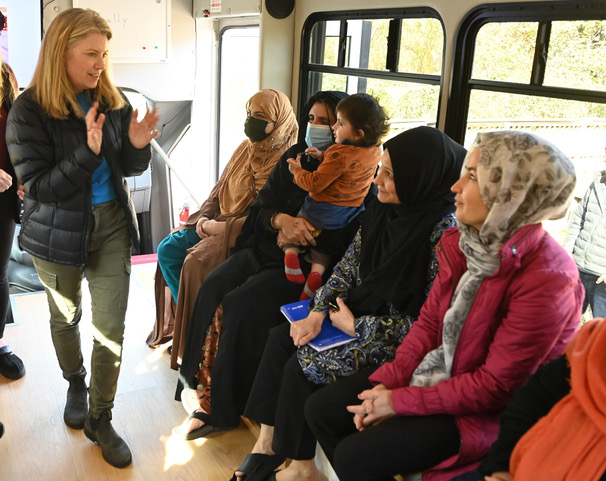
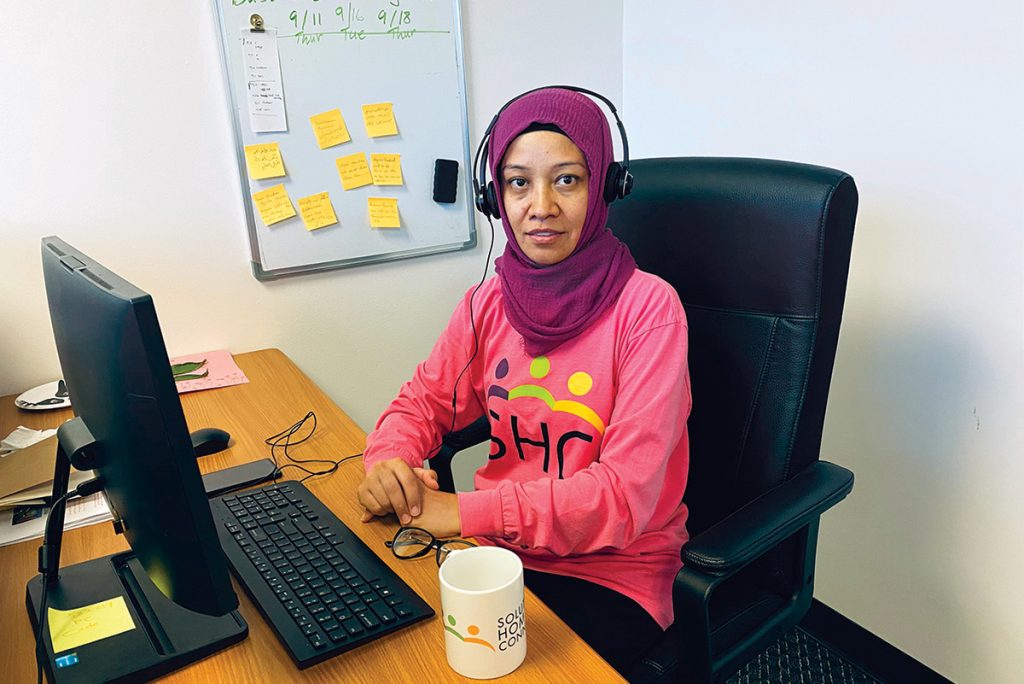
Today, Solutions in Hometown Connections (SHC) serves about 500 newcomer mothers each 10-week teaching session, supported by 50 volunteers and 30 staff members, many of whom are refugees or former students themselves. They run a preschool, a food pantry, English language classes, and resource referral services. Their Welcome Workshop classes meet women where they are, quite literally, by providing classes in a specially outfitted bus – turned mobile classroom – that travels to the parking lots of their own apartment buildings. These classes offer an opportunity for newcomers to connect with one another while learning the basics of life in the U.S. Answering questions like: When should you call 911? How do you register kids for school?
SHC intentionally resists a one-size-fits-all model. Kate and Merritt don’t imagine they know what’s best for everyone. They don’t measure success by how many women become employed, attend college, or become fluent in English. They measure success by how many women achieve the goals that they set for themselves.
Kate is so determined to break down the typical client-provider dynamic that she catches herself mid-conversation: “I think I used the word ‘client’ earlier, probably just for your benefit, because we usually never use that word. At SHC we use the words students or newcomers”
Starting small and growing steadily
The journey from meeting Farida to offering the current wealth of services was a long, intentional ramp-up. Kate and Merritt started with a slew of volunteers and minimal out-of-pocket expenses. As their work expanded, they began seeking grants and partnerships.
They now operate with an array of funding sources: foundation grants, individual donations, and significant state funding from Maryland. As they grew, they continued building their volunteer base while expanding their staff roster, offering flexibility to mostly part-time employees who can fit work into their own schedules.
The services they offer clearly resonate with the community. They’re currently at full capacity with long waiting lists. While SHC offers important content and support, they also provide much-needed connection for women who have been separated from their families, communities, and traditions.
It means a lot to Kate that SHC is considered a trusted partner by their students, government agencies, and resettlement partners alike. To Kate, this means that they’ve done things right.
From welcome to independence
Kate tells the story of Engila, a mild-mannered woman who joined an SHC class just before Mother’s Day one year. As they were discussing the concept of Mother’s Day cards, she surprised Kate with a sly smile and a quiet quip that “every day is father’s day.”
As Kate laughed, she was struck by how quickly human beings can connect through common experiences and humor despite having incredibly different lives. That small connection launched a friendship, and over time Kate had the opportunity to experience Engila’s formidable intellect and drive.
Engila moved on from SHC classes to earn a certificate in early childhood development at Prince George’s Community College. Now she’s an employee at SHC herself, working as an Early-Childhood Program Coordinator who plans programs and teaches classes. She became a U.S. citizen and even occasionally speaks in front of large groups on behalf of SHC – an activity that might have been unimaginable at that first Mother’s Day lesson.
Engila’s story embodies Kate’s vision for SHC: from welcome, to growth, to independence – all on her own terms.
Why it works
Kate is insistent that there’s nothing special about her personally. She didn’t bring any unique skills to this work – she wasn’t a teacher and she didn’t speak Dari. She just noticed a need and felt a deep connection to women who weren’t receiving the welcome they deserved.
There was a clear and persistent gap in services oriented toward the women SHC serves. SHC is filling that gap “in a really unique way that welcomes and supports people throughout the process.”
The other winning formula is their volunteer base. From the beginning, they’ve relied on a strong cadre of volunteers who care deeply about the students and the organization. This group serves as a “mini-megaphone” for the organization, generating a self-reinforcing base of volunteer and donor support that continues to expand.
The power of partnership
Kate acknowledges that this is “a ton of work,” and that it feels more important now than perhaps ever. But she’s quick to turn to the strong and supportive relationship between herself and Merritt as key to maintaining optimism and momentum.
Some days it feels like a lot, but she and Merritt “have always said that together, there’s nothing we can’t do. And we’ve tackled a lot.”
Kate’s advice
Kate encourages all of us to get out there and volunteer. To find something that resonates with our values and do it. “You keep living your values and feeding your soul as much as you can until, hopefully, things turn around.”
She also notes that if any readers are interested in volunteering with SHC, they always welcome new volunteers and provide orientation and support for anyone who decides to get involved.
Kate’s story reminds us that you don’t need special skills or credentials to do something powerful. With awareness, dedication, and the right partner by your side, you can achieve more than you ever knew was possible.
To learn more about Solutions in Hometown Connections, volunteer, or donate to their work visit https://www.shconnections.org.
Derrick Ijames House of Dajour
Derrick Ijames:
House of Dajour
Serving love, one warm meal at a time.
How Derrick Ijames is using home-cooked food and genuine care to help his former “roommates” rebuild their lives.
“All people want to know is that they’re loved and they’re not forgotten. And when they feel that they have somebody by their side, they’re going to want to do better.”
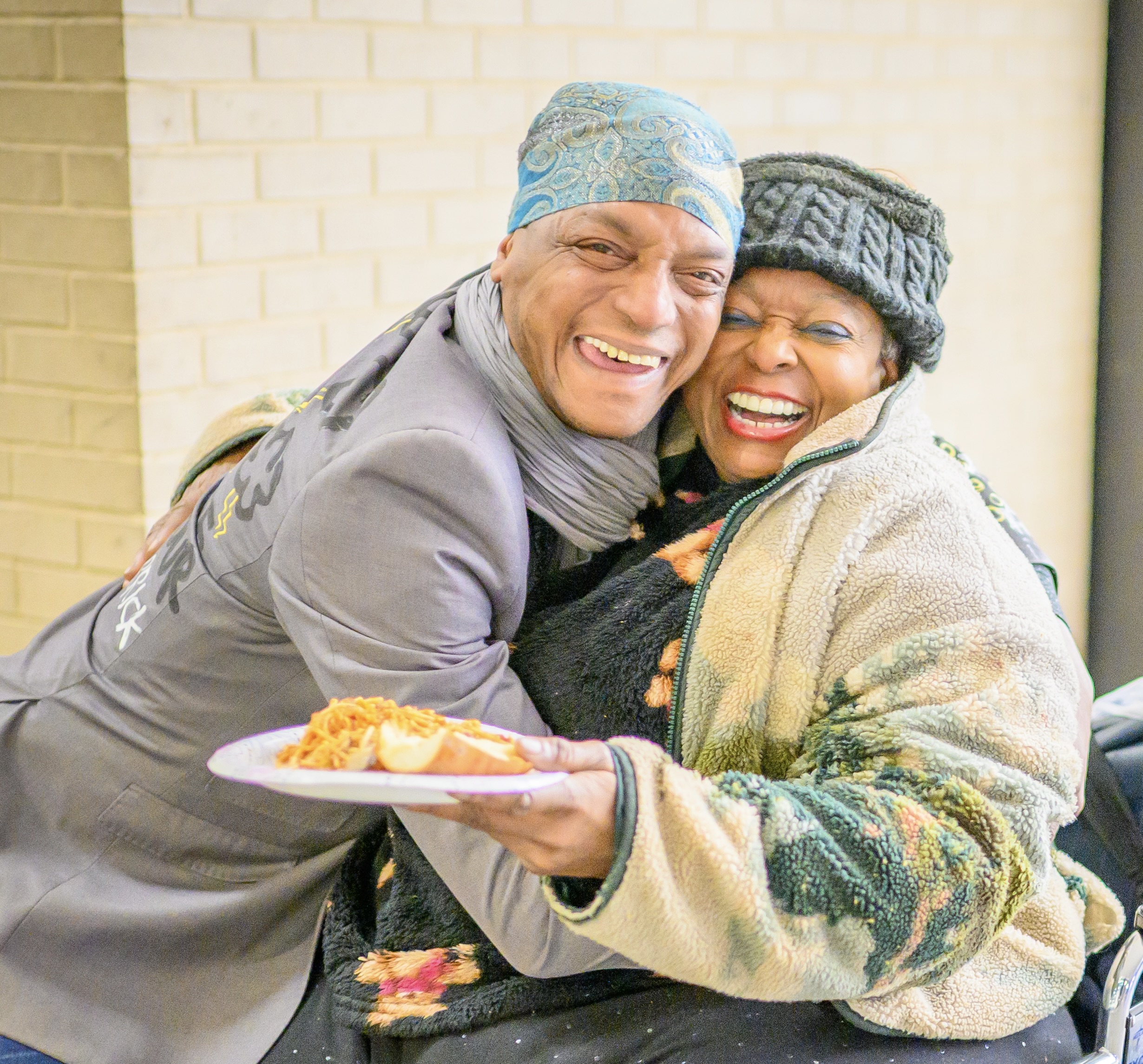
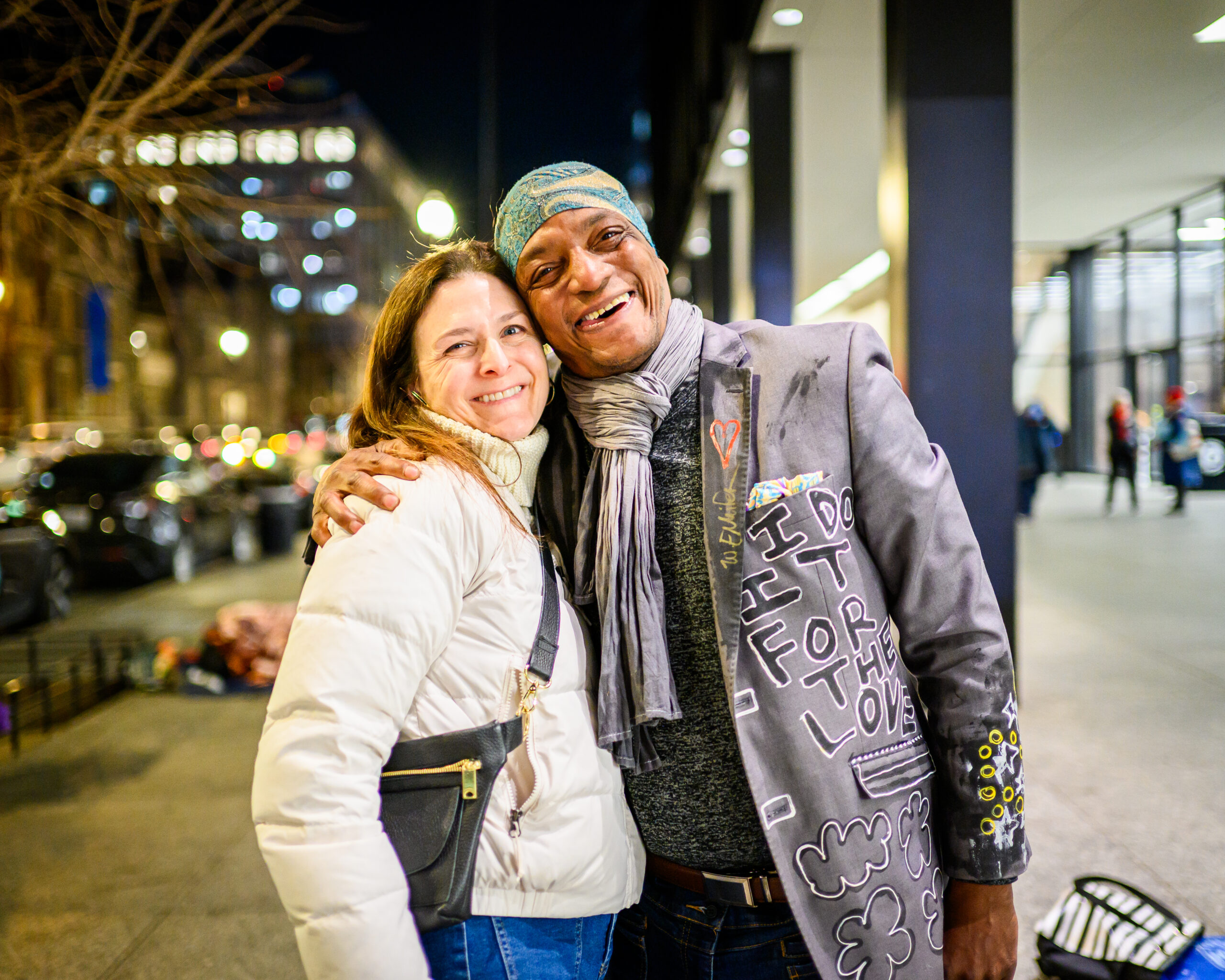
Derrick Ijames doesn’t romanticize his story. He tells it honestly and expressively – pausing early on to joke about his family nickname, “Mr. Emo,” earned by his tendency to display his feelings. Derrick’s presence is palpable. He exudes a positive and joyful energy that is tempered only by his concern for people living without shelter, warm meals, or enough love in Washington, DC.
Derrick is equally open and earnest whether he’s recounting his service in the U.S. military, his travels to Iceland and Germany, his career as a chef, or describing less proud chapters of his life. Behind this candor lies a profound commitment to others that’s demonstrated by the work he does every day.
Feeding a deeper hunger
That work is grounded in Derrick’s own experience of homelessness and hunger. He’s not shy about describing his days sleeping in DuPont Circle or behind the nearby CVS. He remembers the hunger – not just the ache in his stomach, but the deeper hunger for care, dignity, and validation.
“One of the reasons I serve the food that I serve,” he explains, “is because when I was homeless, I always dreamed that someone would bring me a nice, hot home-cooked meal.”
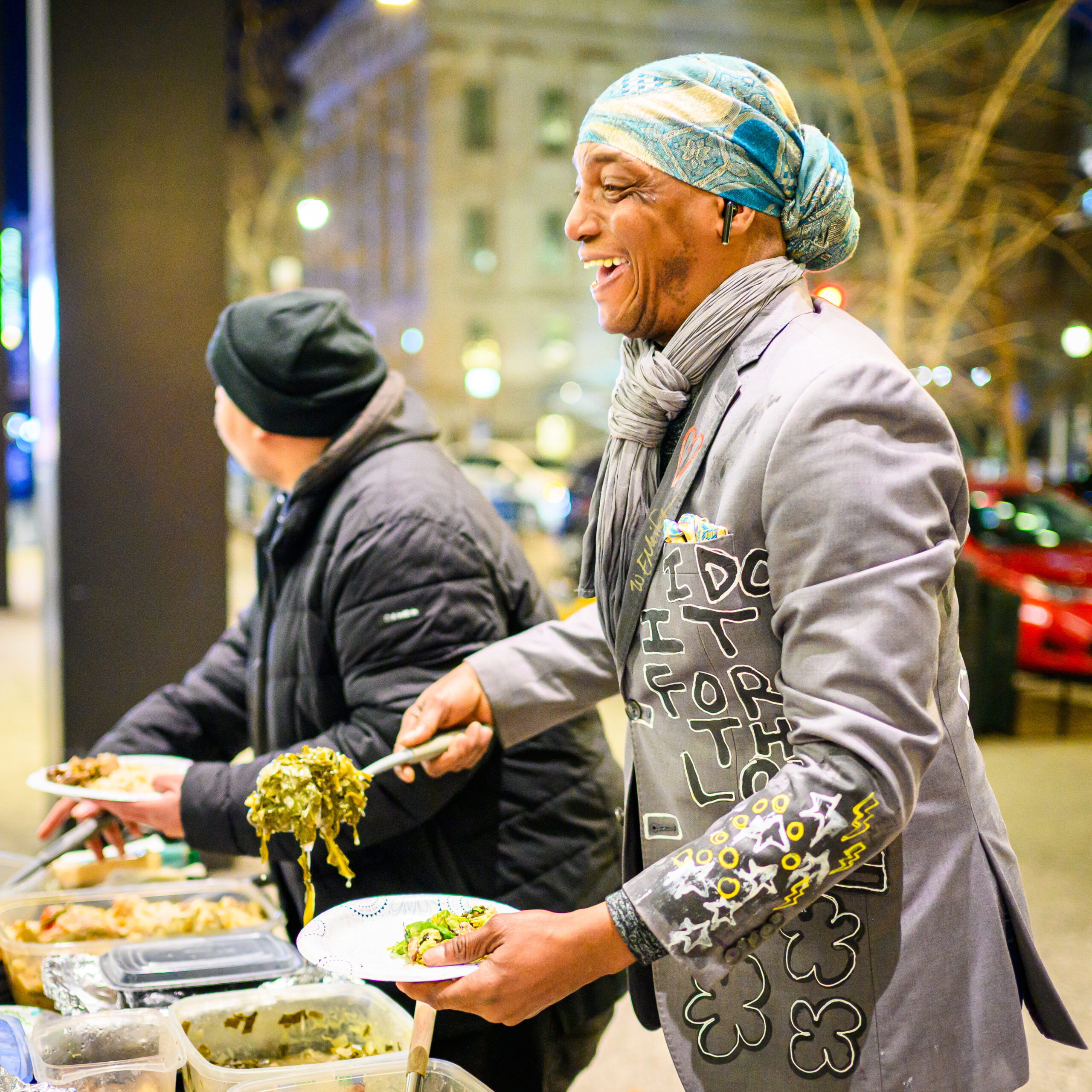
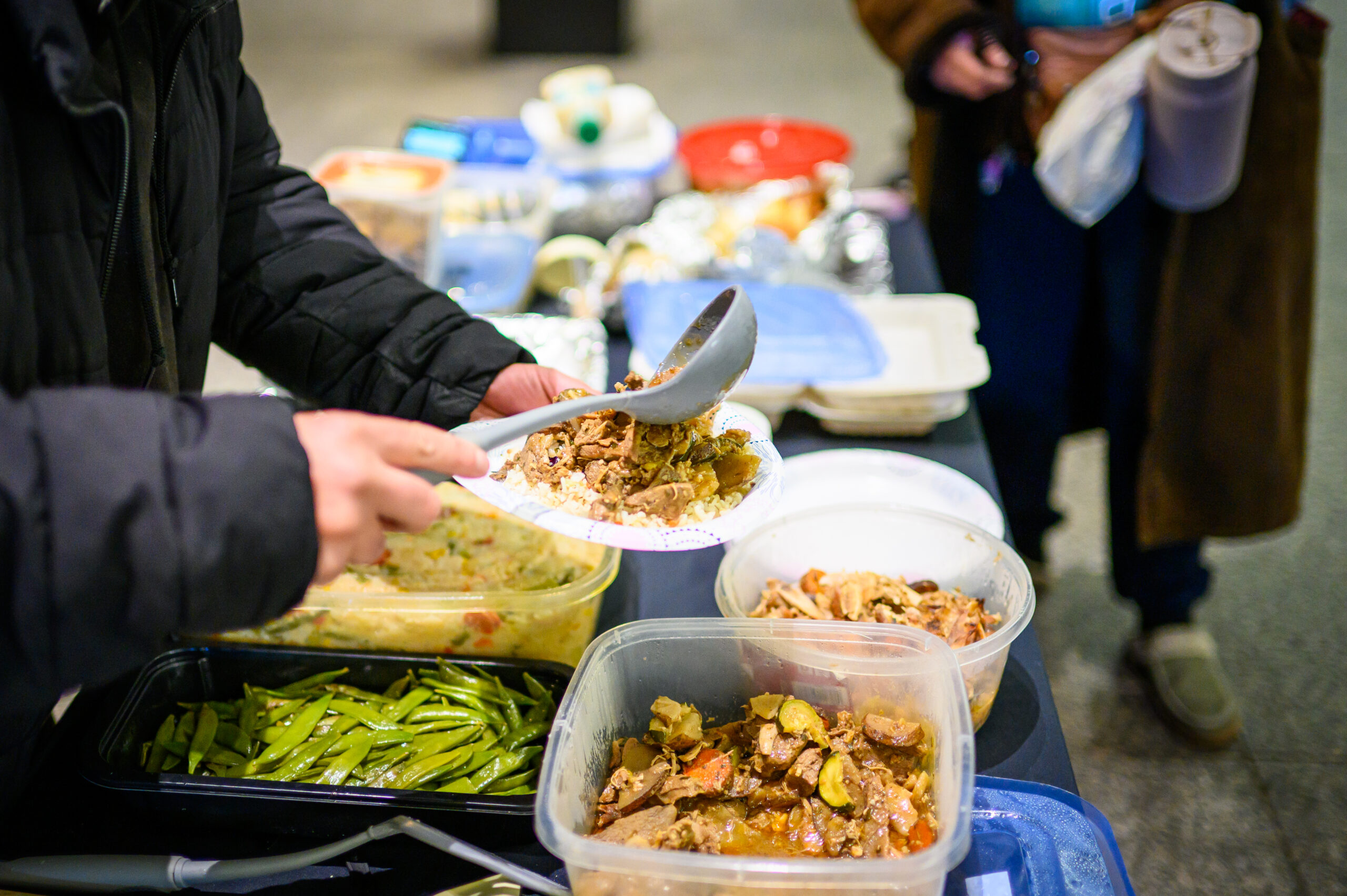
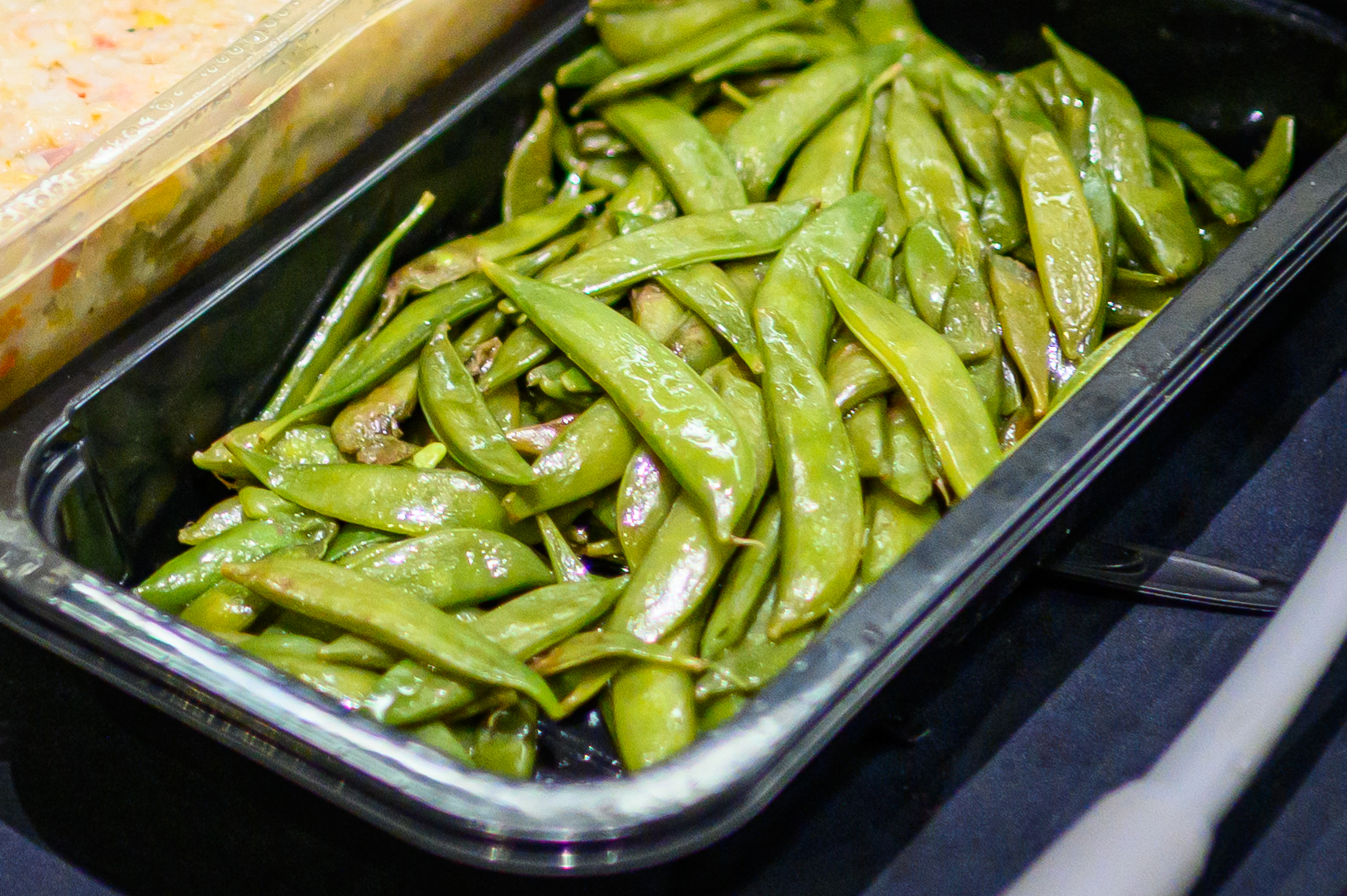
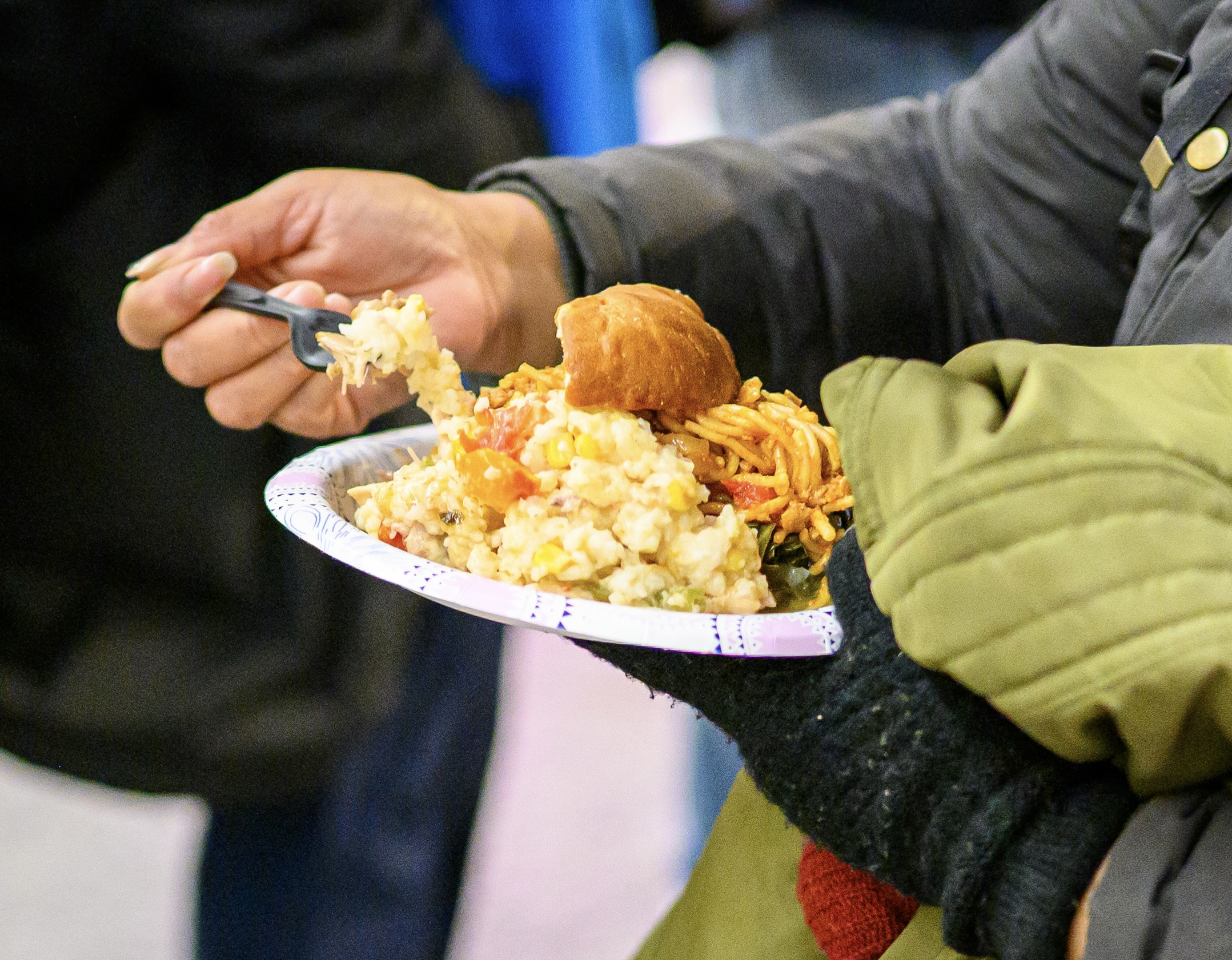
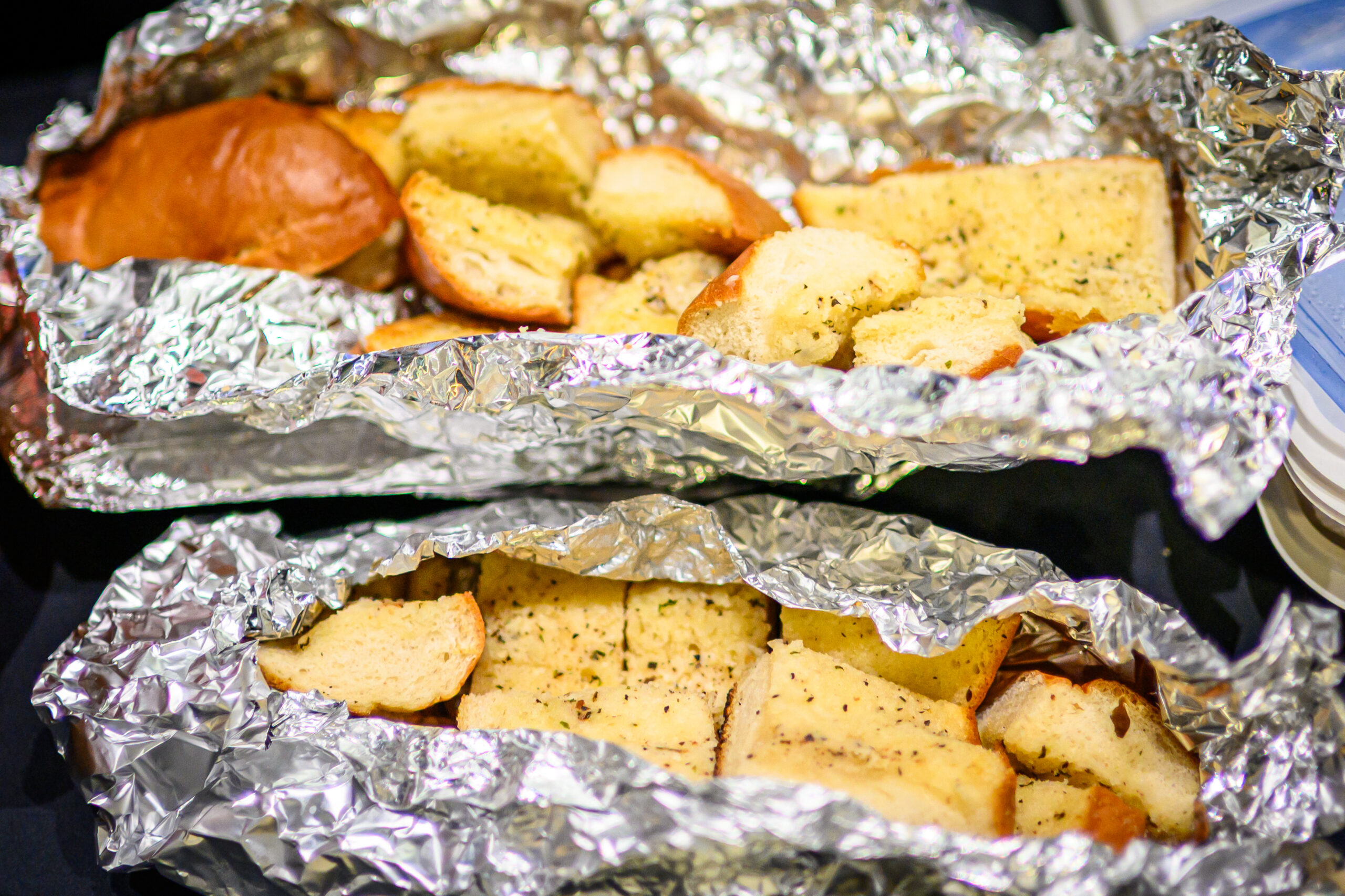
When he was homeless, food often came in the form of cold sandwiches – sometimes half-eaten – handed out with good intentions but little warmth (literal or figurative). “I still hate bologna,” he says emphatically. Today, through his organization called House of Dajour, he serves anything from shrimp scampi to baby back ribs to New York strip steak with garlic mashed potatoes or caprese salad.
Because Derrick knows the food isn’t just calories. It’s dignity. It’s love. It can open doors.
Sharing what’s available
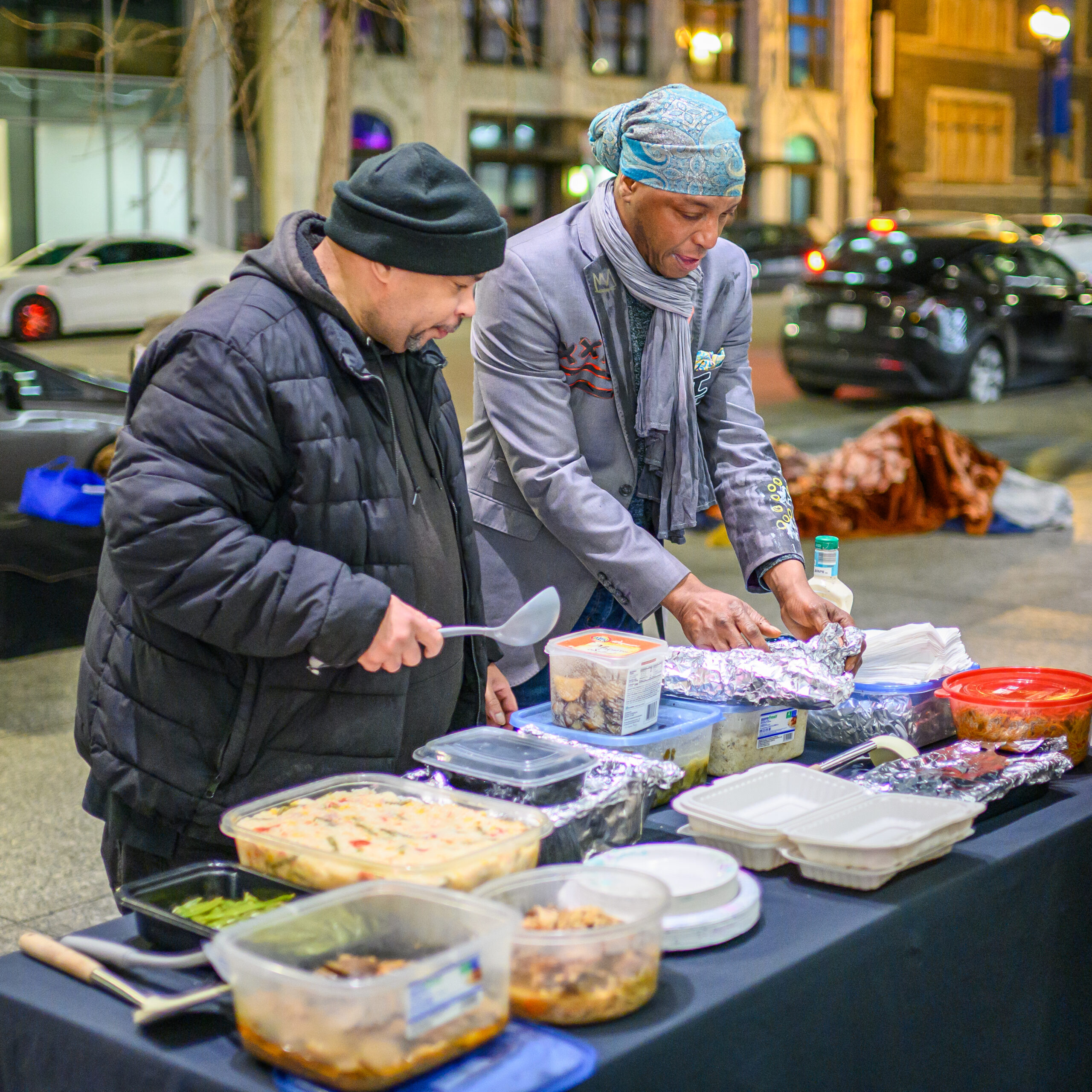
Derrick is committed to finding and sharing DC’s resources, which he describes as abundant. When he decided to start serving his “family in the streets,” he researched food banks across the area. Now he visits three or four food banks every day and stops at Walmart or Dollar Tree to fill any grocery gaps and purchase the necessary paper goods. He relies on Metro and a cart to haul materials to his apartment for preparation and then back out to the people he serves in the form of hot meals.
Many regular stops know about his work and give him extra food to share. Martha’s Table often provides large bundles of sandwiches that he distributes at DuPont Circle. His own case manager at MBI, a firm that helps recently incarcerated people reintegrate with society, donates clothing and even Narcan for Derrick to share with the community. I personally first met Derrick at NW Community Food (profiled earlier in the series here) where he’s a regular on Sundays.
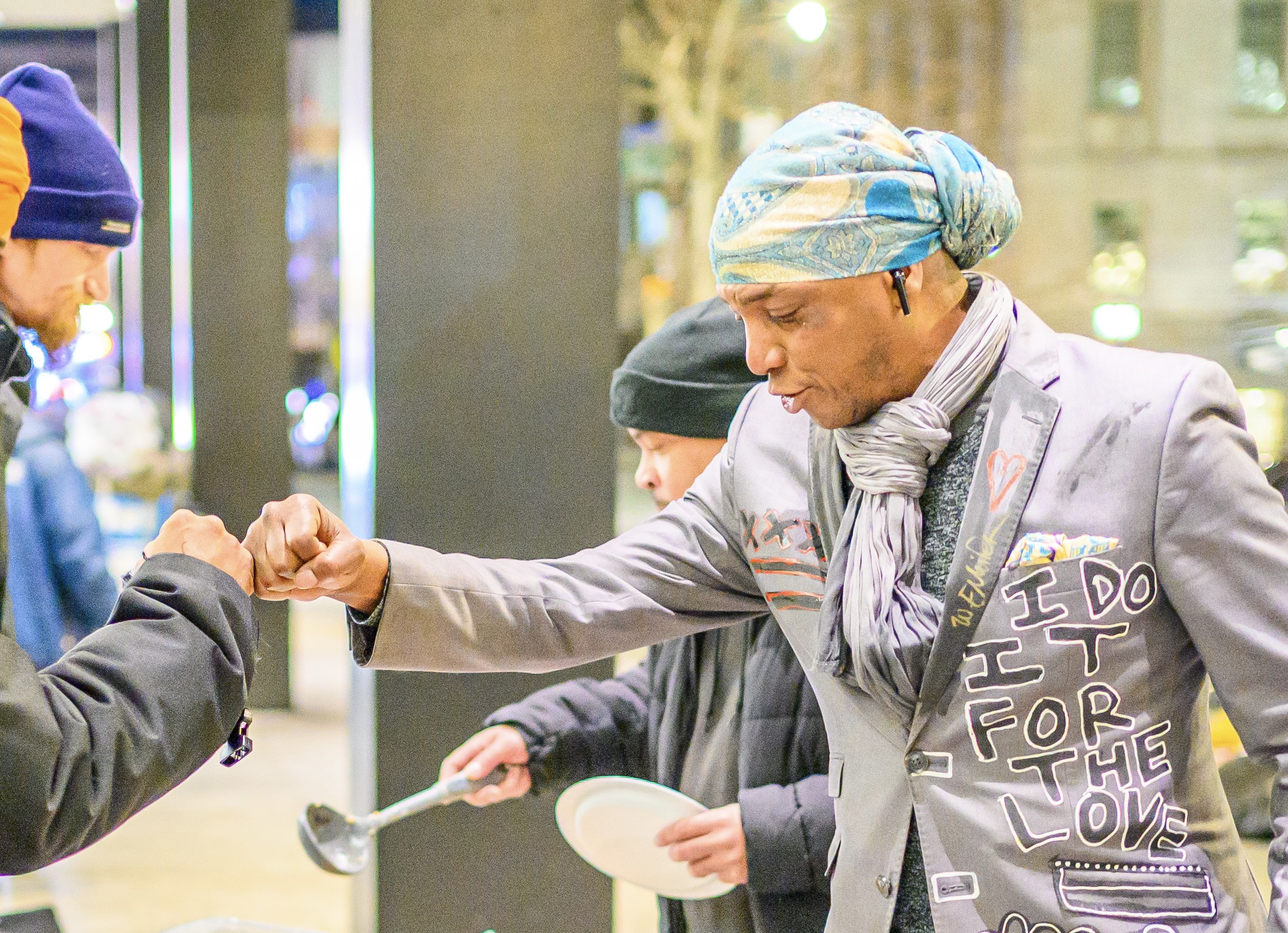
Derrick’s approach reflects deep respect and empathy. “I don’t give out little servings of anything. My plates are overflowing. I want to get their bellies full. So when they get up under the covers and get nice and warm, they’re going to sleep so well.” He even describes racing home to re-warm food that’s gotten cold, determined to provide the warm meals he once wished someone would bring him.
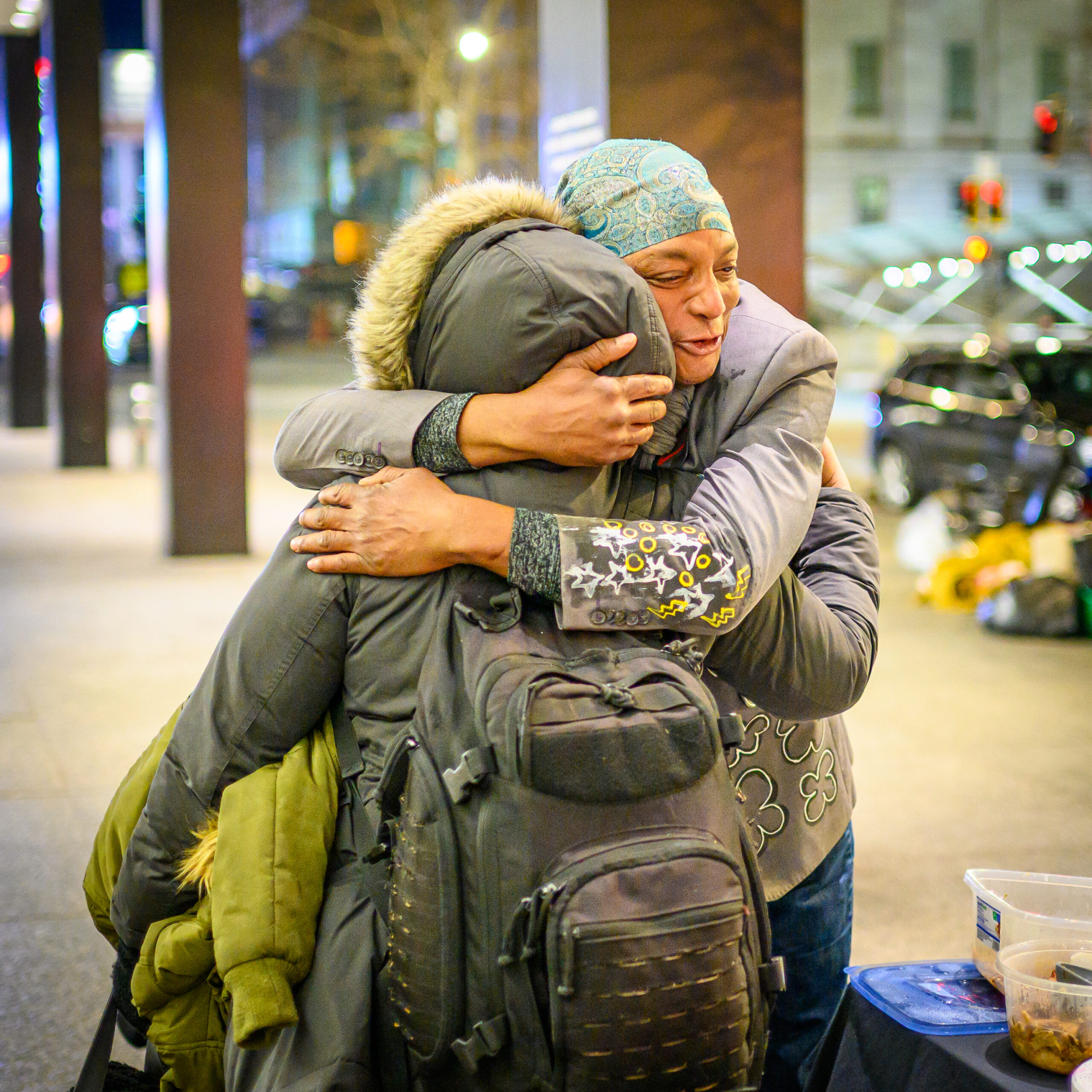
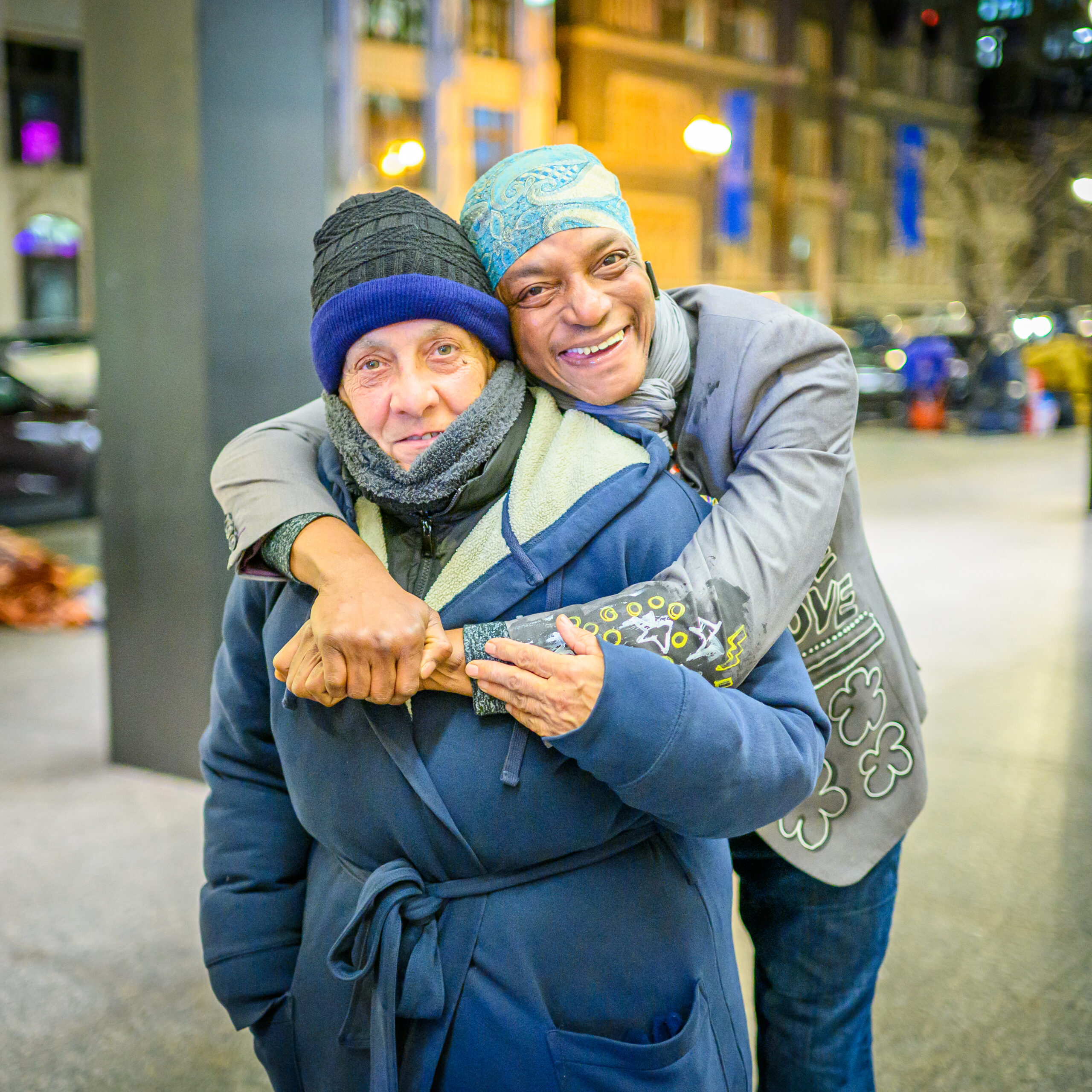
When Derrick arrives on site with his cornucopia of food, the enticing aromas waft down the block and make even the most well-fed mouths water. He is met by embraces from people who look forward to the arrival of Chef Derrick, his tasty food, and his soul-nourishing energy.
Beyond meals
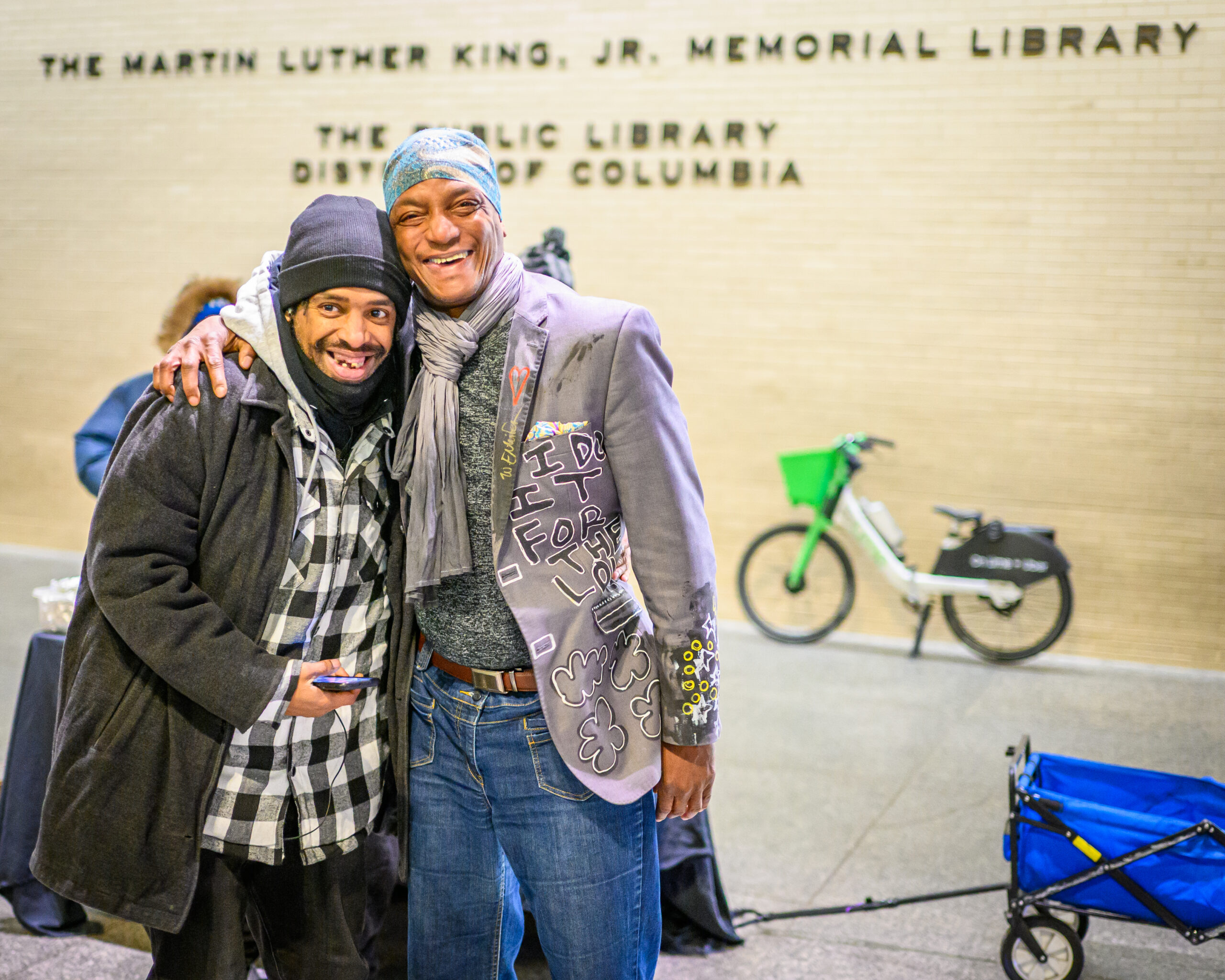
Derrick currently focuses on feeding the many people living outside Martin Luther King, Jr. Memorial Library in downtown DC. But his real ambition extends far beyond full plates. The food is a way in – a way to build trust and inspire people to take advantage of the resources the city offers to rebuild their lives.
“My delicious food is really just a front to get them into the doors, so they can get some real help,” he explains. Derrick describes the people he serves as his former roommates. “I was sleeping on the park bench right next to them. They have trust in me, and they know if I can do it, they can do it.”
He’s referred over ten people to Miriam’s Kitchen, where his own case manager, Jessica Ruoff, helped him move into what he describes as “the most beautiful place that I’ve ever lived in my whole, entire life.” Adding, “and I’ve been around the world.” When Ms. Ruoff learned Derrick is a military veteran, she helped him access veteran support that makes his apartment affordable. It’s the perfect base for his operations – complete with a kitchen island, plenty of cabinet space for bulk food storage, and even a smart stove and refrigerator.
Miriam’s Kitchen and Ms. Ruoff help people obtain social security cards and birth certificates, which lead to IDs, which open doors to banking and other resources. Derrick himself often guides people through the process, ensuring that they take all of the necessary steps to reach the pathway toward a better life. Derrick’s ultimate dream is to create an organization similar to Miriam’s Kitchen with a full complement of wrap-around services.
Uncle Tim’s generosity
One story captures the spirit of House of Dajour perfectly. Uncle Tim is an older man who lived on a corner near DuPont Circle for over twelve years. He hadn’t slept in a bed in over a decade. As Derrick describes it, “it was almost like he wasn’t homeless in his mind, because the streets were his home.”
Derrick brought warm meals to Uncle Tim whenever he could. He smiles describing Uncle Tim’s favorite: “He loved my sweet southern spaghetti with meat sauce, but he liked me to put jalapeños in it, because he likes it real spicy. It makes him sweat. He says it keeps him warm.”
But Uncle Tim didn’t just receive. On days when Derrick showed up without food, short on resources, Uncle Tim walked him to the bank and withdrew money to help Derrick continue feeding others. Derrick laughs as he recalls Uncle Tim’s cheeky mandate: “Make sure you feed me first, but also feed everybody else.”
On a recent, bitterly cold night, Uncle Tim finally agreed to get into a shelter van. When Derrick went looking for him later and learned he was safe, indoors, and warm, he rejoiced. “I’m so relieved. So happy that my friend is safe and warm now.”
Uncle Tim’s story illustrates a philosophy that defines Derrick’s life: you don’t have to have a lot to help someone else.
Childhood lessons from his mother
The House of Dajour works because Derrick shows up consistently and without judgement. People trust him because he has been where they are. Because he brings food that feels like love and guidance that feels possible. Because he considers them family.
Derrick’s instincts didn’t appear out of nowhere. He traces them back to his mother, Barbara, who led by example. He tells the story of a homeless man named Mr. Sissy who lived in his childhood neighborhood. Barbara would make breakfast and send young Derrick to deliver a plateful to Mr. Sissy every morning. Over time, a real friendship formed, and Derrick never forgot the feeling of human connection he learned from that experience.
Derrick’s advice
Derrick is a deeply religious man. “My boss ain’t me. I work for the Lord. The love He gives to me, I’m giving it right back to the street.” His advice to anyone searching for inspiration is a gentle mandate: let yourself be supported – and give back in any way you can.
“Reach out to your family,” he says. “There’s someone who loves you. They might not give you money, but they’ll give you direction.” He stresses that it’s not just about taking, though, it’s also about giving back.
“Faith without works means nothing. You’ve got to do some walking, just like Jesus did.” Sometimes all it takes to change a life – including your own – is showing up with what you have and letting love do the rest.
To help Derrick purchase supplies and expand his work, you can donate to his Go Fund Me campaign here.
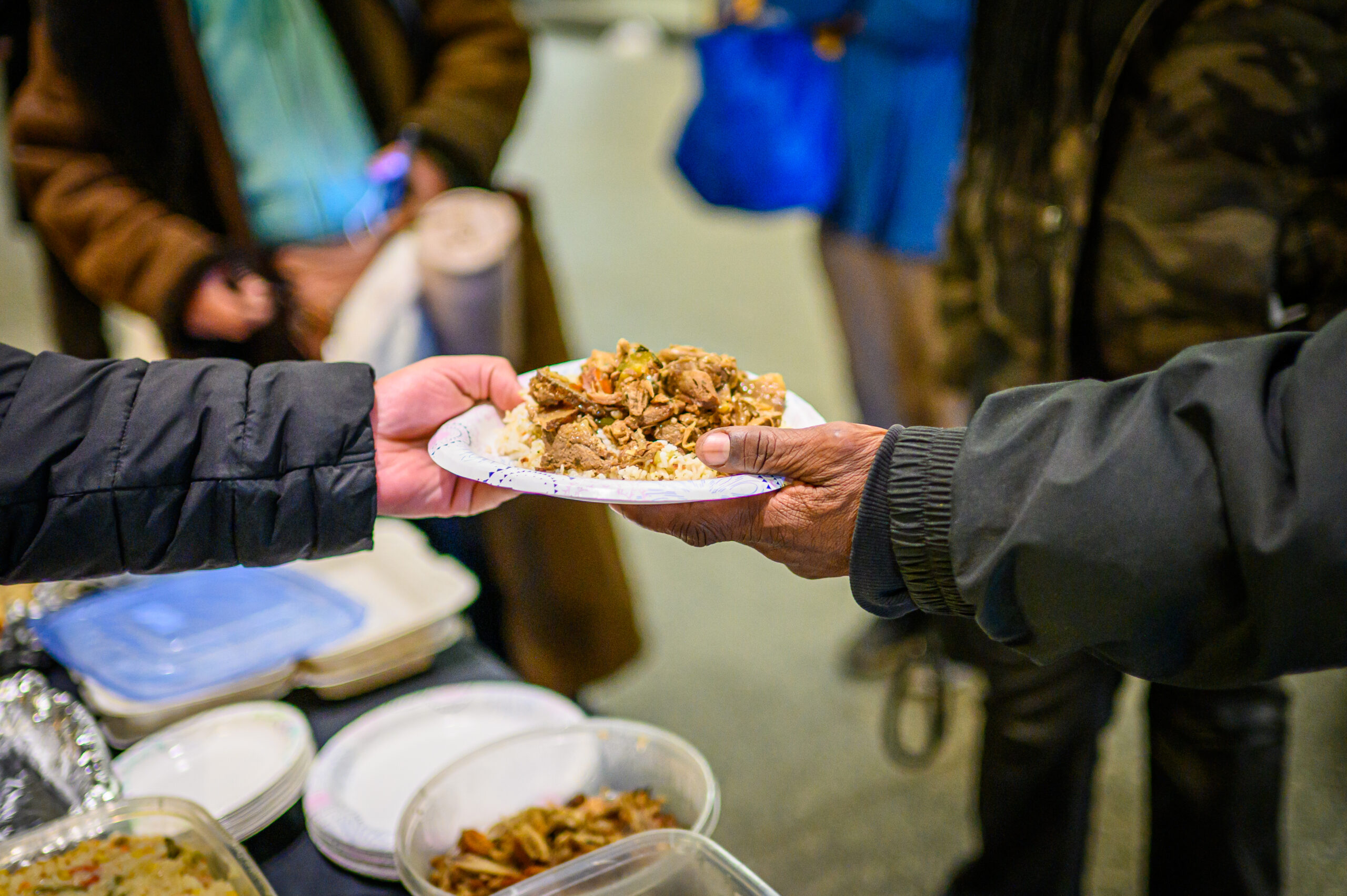
Simon Landau and Amir Lowery: Open Goal Project
Simon Landau and Amir Lowery:
Open Goal Project
Leveling the playing field.
How Simon Landau and Amir Lowery are using soccer to create opportunity, belonging, and pathways to success for DC youth.
“There’s a comfort in knowing that there are good things happening all around us that we don’t even see. It doesn’t take a lot to find what’s good.”
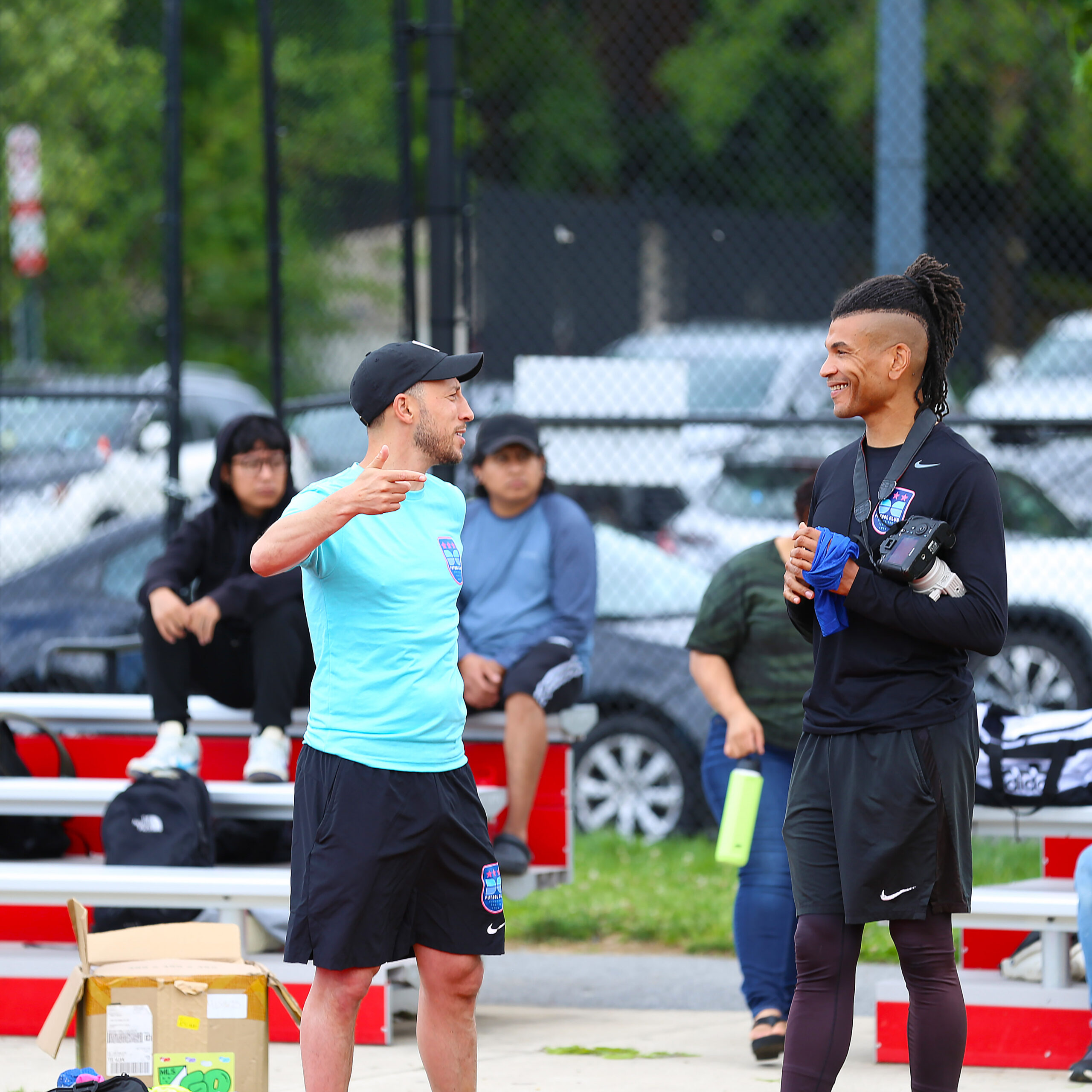
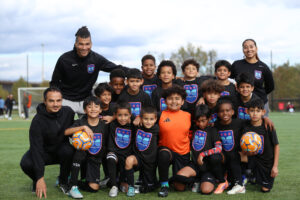
Soccer has been a constant thread in the lives of Simon Landau and Amir Lowery – from childhood through college and beyond. As adults, both men found themselves coaching youth soccer in Washington, DC.
Amir was coaching professionally at a competitive youth club, and Simon was a volunteer with an after-school program. While they had never met, the two men were arriving at the same realization: competitive youth soccer in DC was quietly excluding many of the city’s most talented players.
The barriers were everywhere. Club fees ranging from $3,000-$5,000. Games played far outside the city. Applications available only in English and requiring hard-to-access personal documents. The result was teams that didn’t reflect the talent pool that existed in DC – racially, economically, or geographically.
Amir noticed it first-hand. The teams he coached bore little resemblance to the diverse teams he’d grown up playing with in the city.
Simon was playing pickup soccer near his home with neighborhood dads when he noticed the raw talent displayed by the young daughter of another player. Ariana’s family didn’t have the resources to pursue the competitive club soccer that would be the right fit for her skills. It was clear to Simon that Ariana’s situation was not unique.
When a mutual friend realized that both men were seeking solutions to the same problem, he made an introduction, and Open Goal Project was born.
Building something different
Initially, Simon and Amir were simply finding ways to help a handful of talented youth participate in existing competitive leagues – navigating tryouts, paperwork, fees, and transportation. With their support, Ariana and another talented young player named Precious were accepted into one of the top-ranked youth clubs in the country, located nearly an hour away in Virginia.
The girls thrived on the field, but the experience was complicated. Precious remembers being one of just two Black players on a predominantly white team. “I constantly wondered, ‘Am I being judged? Do I feel welcomed here?’” she recalls.
Simon and Amir were proud of the girls, but uneasy about the system they were working within. Pulling kids out of their communities, fundraising constantly, coordinating rides, and troubleshooting paperwork one family at a time wasn’t sustainable. And word was spreading about their work. “After a few years, we started getting outreach from other kids saying ‘Hey, I made this team, but they won’t let me play if I don’t pay $200 for a jersey or a registration fee,” Simon recalls.
They realized that if they wanted to scale and have broader impact, they needed to create their own club. So they got to work and did exactly that.
More than a game
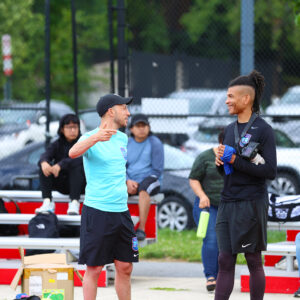
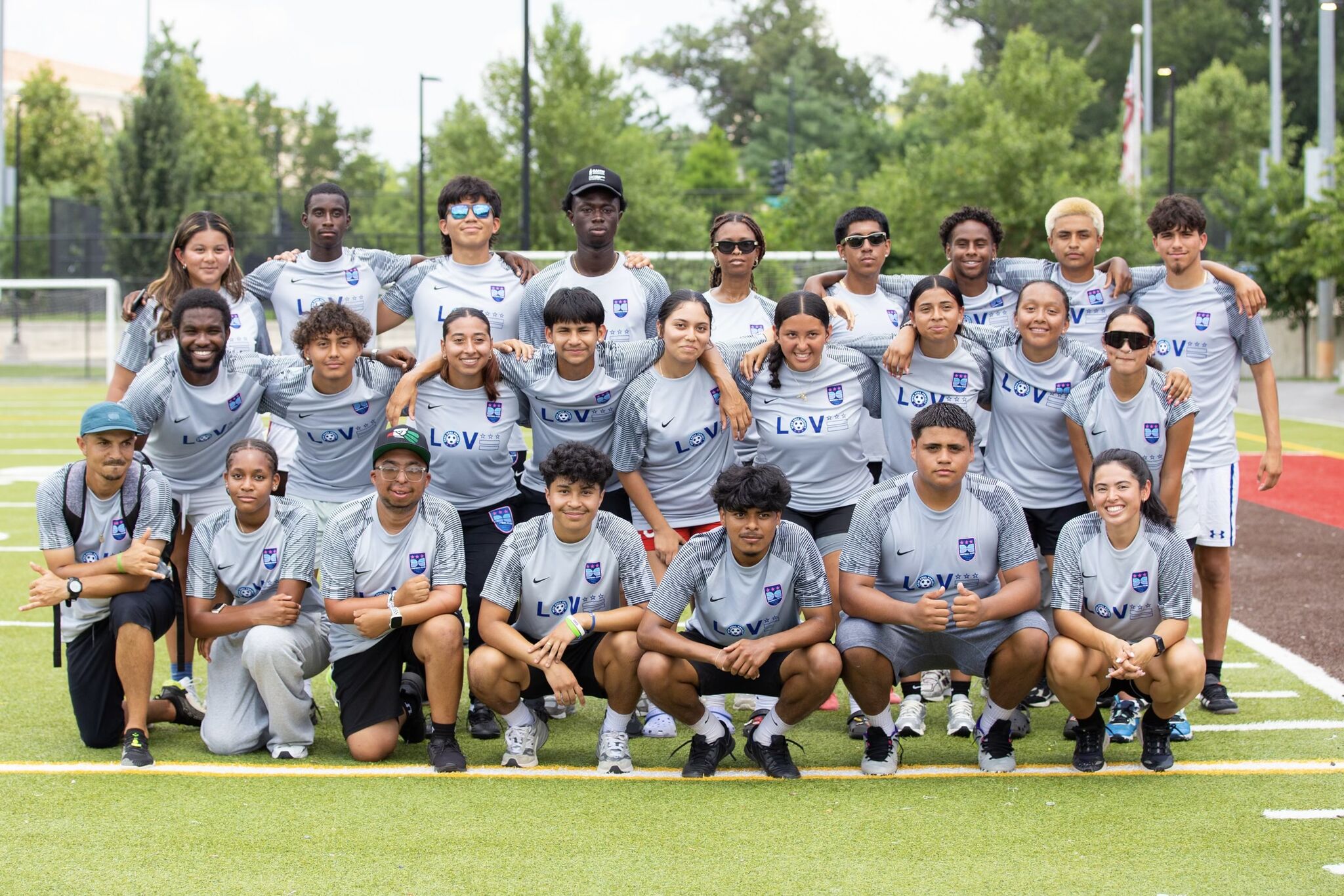
Today, Open Goal Project serves over 500 kids through multiple programs. Every program is free. All activities are accessible by public transportation. Coaches and staff are bilingual in Spanish and English. Simon and Amir aren’t just determined to remove the typical barriers to access, their mission is to help players succeed at life – using soccer as a launching pad to college, careers, and opportunities to give back. They call it “the empowerment cycle.”
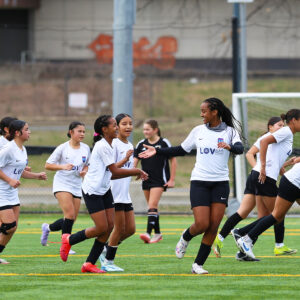
At the core of their work is District of Columbia Football Club, DC’s first and only completely free competitive travel club with eight teams for players aged 10 to 18. Like traditional clubs, they train several days a week and compete in leagues and tournaments. But woven into the program are monthly workshops on topics like emotional awareness, college access, and financial literacy.
For younger players, they created MLS GO by DCFC, which is a development league that practices twice weekly, plays games against each other on small fields, and requires no travel.
Each summer, they host a camp that blends soccer, fitness, and life skills. And they’re now finalizing their fourth program: a paid assistant coach pathway that brings former players back as mentors, giving them job experience, income, and transferable skills.
The logistics of all of this are staggering: league paperwork, transportation, uniforms, equipment, and curriculum development – all while managing a nonprofit and constantly fundraising.
Proof of concept
When asked about Open Goal’s most meaningful achievement, Simon’s answer is fundamental: “It really works.”
Since its founding, over 50 of their alumni have attended college. Twenty alumni have played at the college level – two with Division 1 scholarships. More alums have gone on to get their first full-time job after participating in the program. “These are kids who likely wouldn’t have been playing competitive soccer or having access to the youth development opportunities that come with it without this program,” says Simon. “That’s proof of concept – not just that it matters, but that we’re on the right path.”
Simon doesn’t claim a secret formula to their success. “There’s really no secret sauce,” he says. “Just a glaring need.” Before launching, they researched the landscape. Despite millions of dollars flowing through pay-to-play clubs in the region, no one was offering a truly free, competitive alternative. It was time for a different model.
The power of possibility
Precious embodies what Open Goal Project makes possible. After graduating from the University of Maryland with degrees in science and social data science, she’s now both a coach and the organization’s Data Analytics Coordinator.
“I never believed there could be people like me, who look like me, playing at a higher level,” she says.
When she heard Simon and Amir were developing their own free club, she wanted to be part of it. She started as an assistant coach for multiple teams, and then mentioned her desire to integrate her passion for tech with sports. Seeing an opportunity to support her personal development and an organizational need to build capacity, Simon and Amir quickly handed her some data projects.
Watching the progression of the girls she coaches brings her joy. “It took tens of thousands of dollars for me and Ariana to get the same coaching skills and lessons that Amir’s offering for free. And seeing the girls progress and then seeing us win championships – it’s just great.”
What might mean most to her, though, is the sense of belonging: “These kids are surrounded by people who grew up in the same background. There’s a real sense of inclusivity, where everyone feels like they belong here, like the sport is for them. I think that’s what I really love about Open Goal Project.”
Simon’s advice
For anyone seeking inspiration right now, Simon encourages us to take heart in the good things already happening out there. He notes that people have been fighting for what’s right for years, and those people are everywhere. “There’s a comfort in knowing that there are good things happening all around us that we don’t even see. It doesn’t take a lot to find what’s good.”
He adds with a grin, “And maybe just don’t doomscroll.”
Open Goal Project proves that powerful change can come from saying: if the system won’t make room for what’s right, we’ll build a new system.
Simon and Amir didn’t just level the playing field. They built an entirely new one.
To learn more about Open Goal Project, make a donation that will change lives, or get involved, visit https://www.opengoalproject.org.
Sid Edelmann: Little Gallery
Sid Edelmann: Little Gallery
Building community, one exhibit at a time.
How Sid Edelmann and Little Gallery are turning a neighborhood sidewalk into a celebration of creativity and connection.
“Interact with your neighbors – talk to them. Be friendly and supportive. It can’t be a community if you don’t interact with people.”
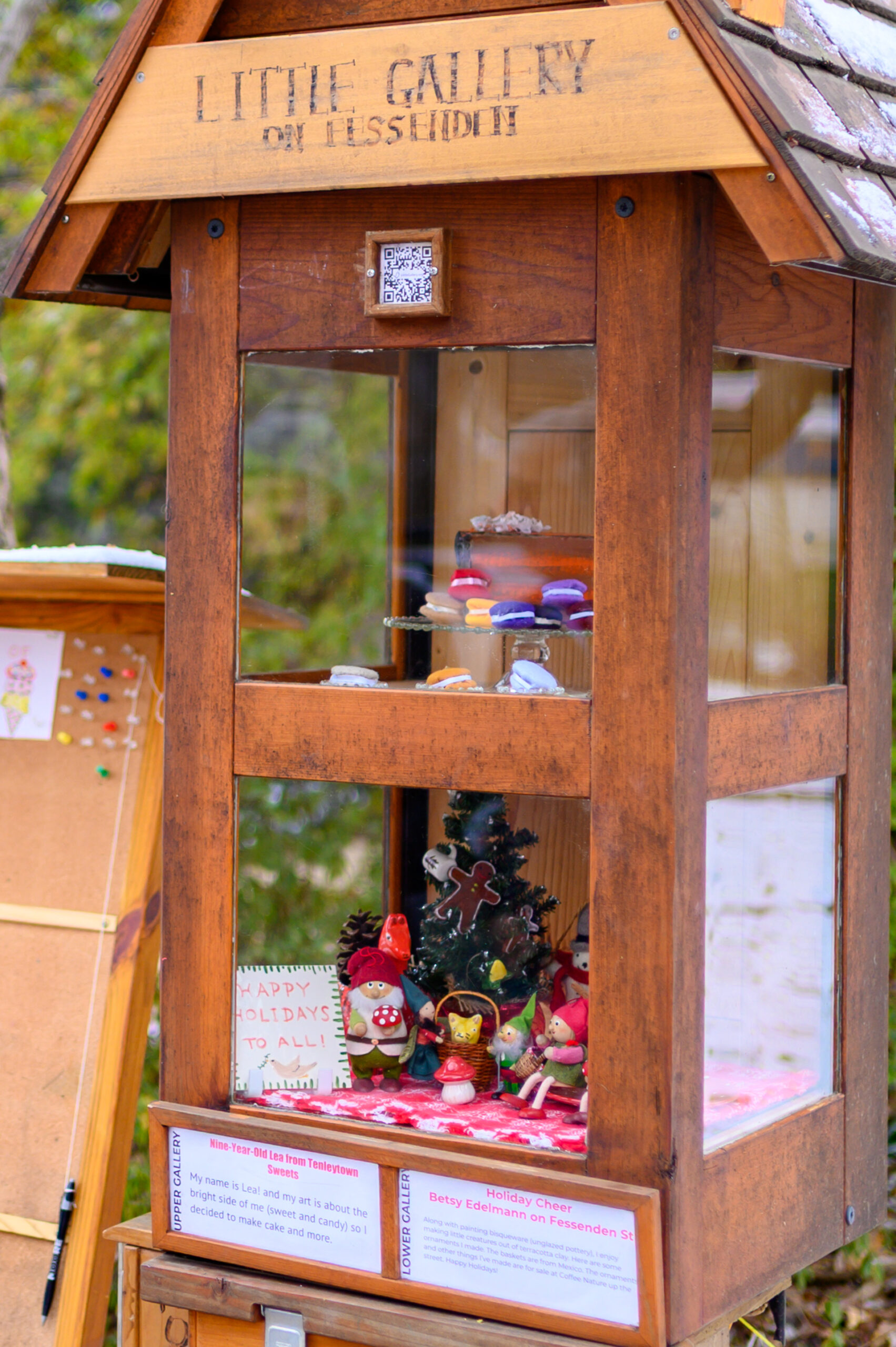
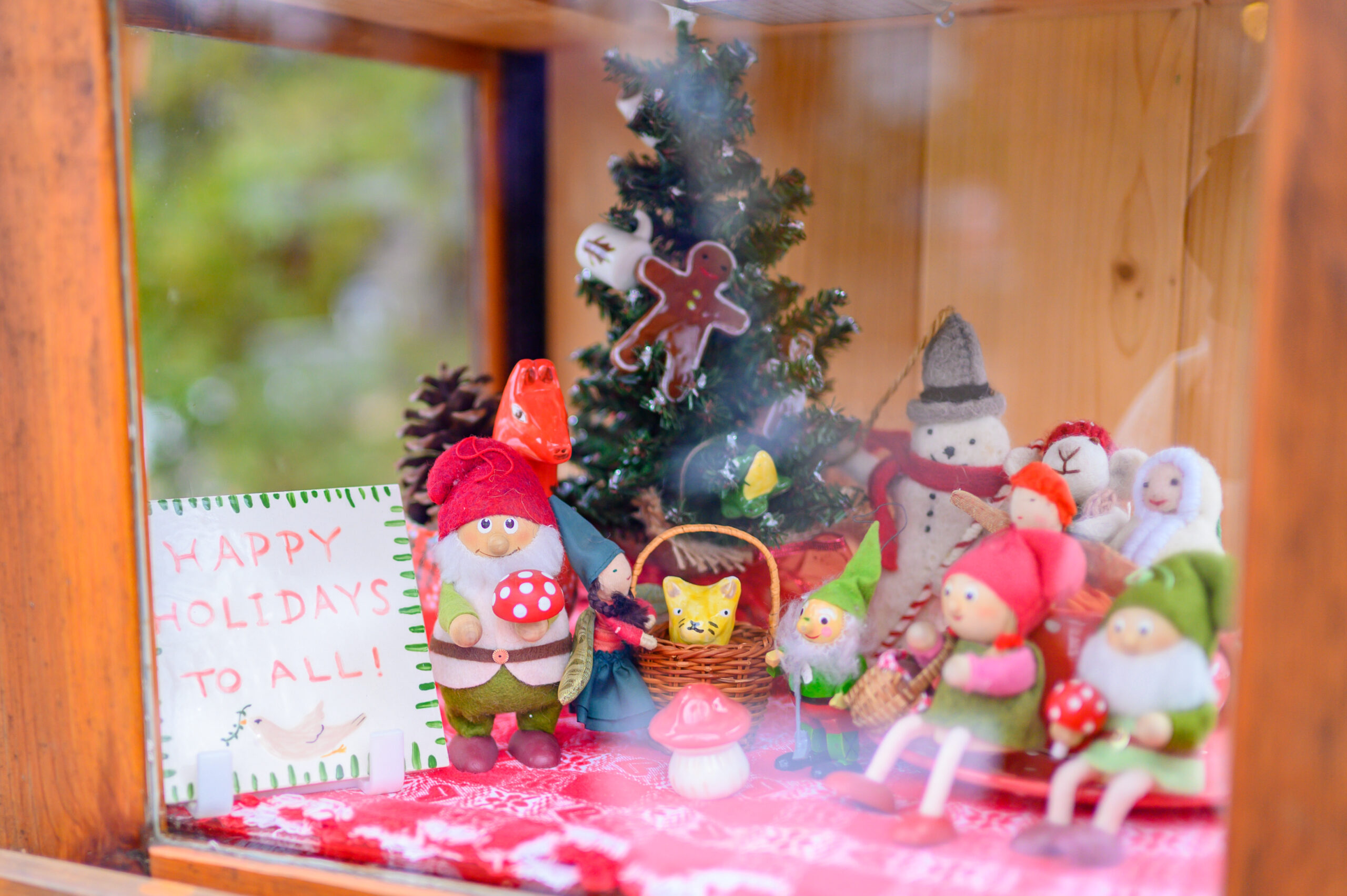
In a world where front doors often stay closed and we scroll through each other’s lives online, Sid Edelmann decided to do something radically vulnerable: he built an art gallery on the sidewalk. If you walk down the stretch of sidewalk on Fessenden Street NW between 44th and 45th Streets in Washington, DC, you might notice an unusual wooden structure with glass doors and warm lights revealing a miniature gallery glowing from the inside.
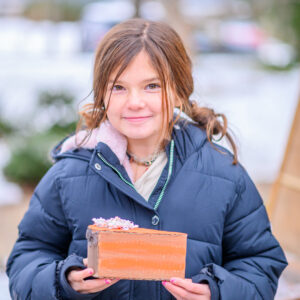
At first glance it looks like a supersized Little Free Library. But look closer, and you might find pottery, paintings, sketches, recorded songs, spoken-word poems, mushroom collections, or chicken-themed limericks. To date, more than 150 artists ranging from age one to nearly 100 have shared their work through Little Gallery.
It’s even hosted original artwork by a neighborhood chicken named Thelma. Yes, Thelma. And yes, it was delightful (see her work here).
But the beauty isn’t just in the art itself. It’s also in what happens when neighbors stop, admire, respond, and connect.
Pandemic-era creativity put to good use
Sid’s journey to Little Gallery began with a global pandemic and too much pottery.
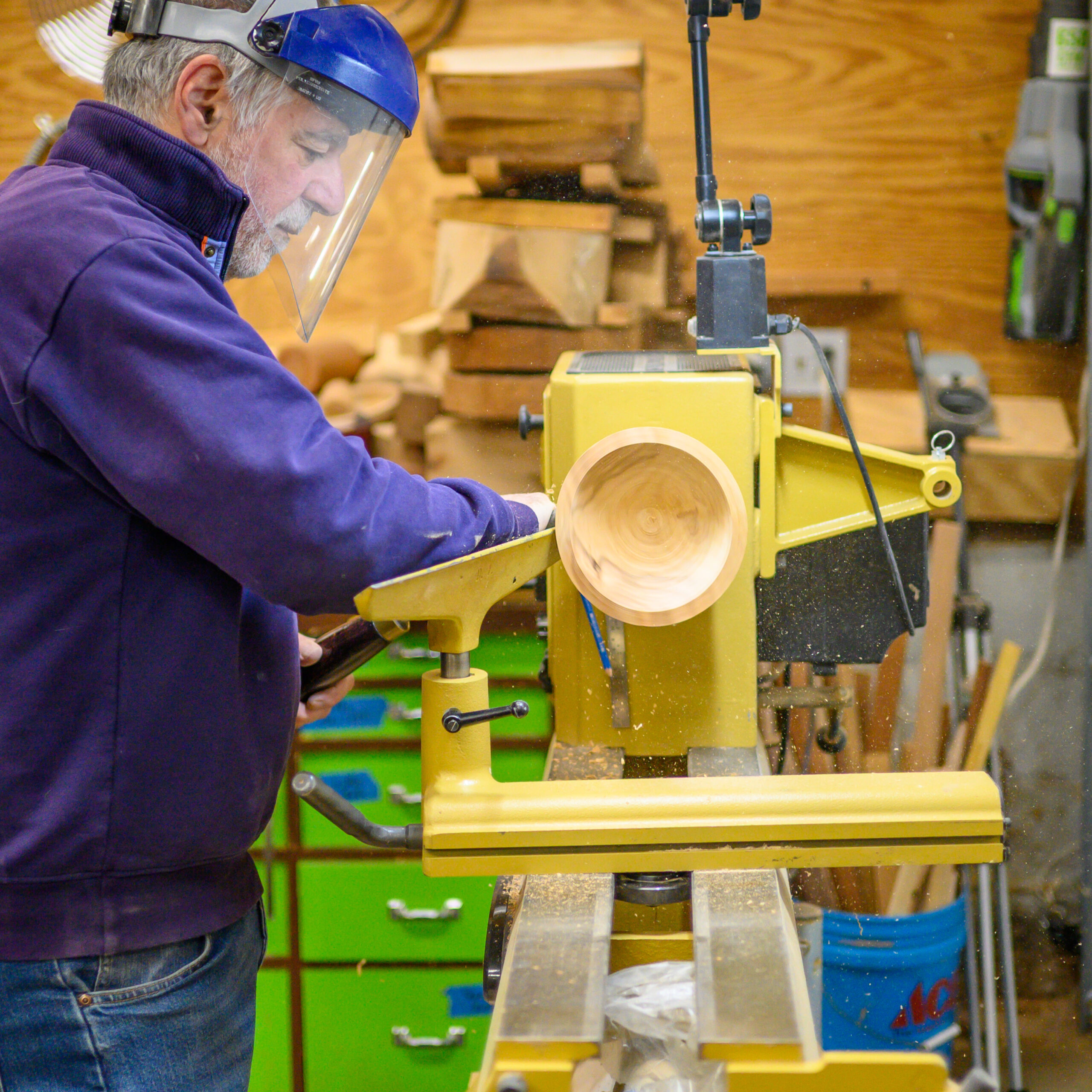
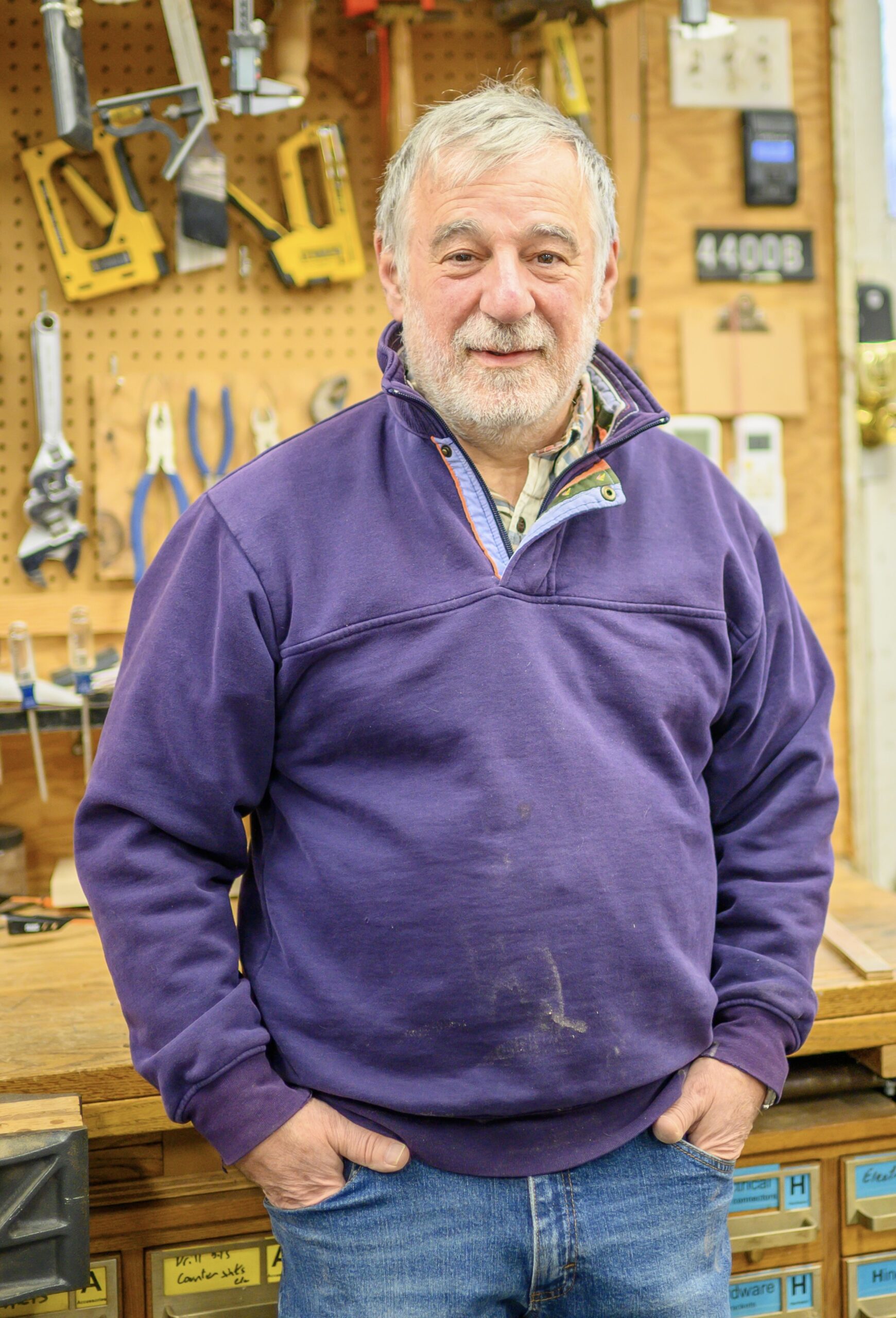
Years before Sid built Little Gallery, he created an extraordinary woodworking shop in his garage. It’s every craftsman’s dream: rows of neatly arranged tools, plenty of space to create, and even a set of card catalogs rescued from the American University Library – now serving as a storage system for small bits. It is equal parts efficient and beautiful.
When the pandemic hit and the world shut down, Sid’s wife Betsy threw herself into creating beautiful pottery. So much pottery that their home was quickly overflowing. In chatting with neighbors, they realized they weren’t the only ones with creative outputs piling up during the pandemic. Sid recalls that “I talked to people who were doing all sorts of things. They were doing artwork, and their kids were bored, and they were getting them to create stuff.”
The Little Gallery solution was perfect. It combined Sid’s woodworking talents with Betsy’s pottery skills, and created a space where local artists could share their work with the neighborhood. Sid gathered leftover glass from a neighbor’s curb and used scrap wood from their shed. Then he got to work with the same rigor and dedication he’d previously brought to his career at the World Bank.
Little Gallery opened in July 2021, and it hasn’t stopped since.
A small space with a big heart
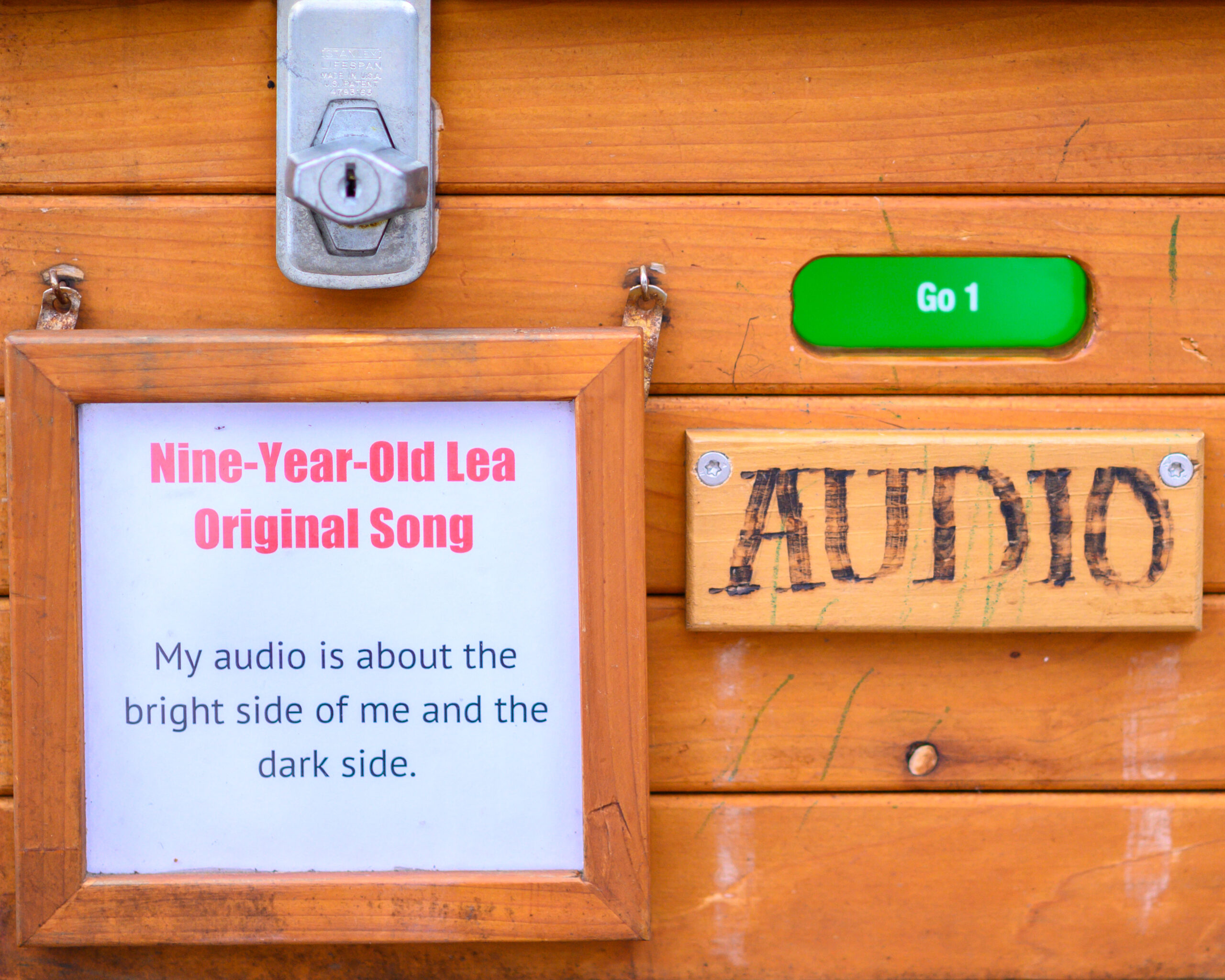
What almost looks like a tiny wood chalet on stilts is actually a sophisticated, interactive exhibition space. The two-tiered structure maximizes space while protecting the art from the elements. Motion-triggered lighting illuminates pieces as walkers stroll by. An audio feature allows musicians to share recordings, poets to recite their work, and artists to describe their creations in their own voices.
Next to the gallery sits a smaller structure: a feedback station with a cork board where passers-by can leave praise, sketches, questions, jokes, love notes, and sometimes incredibly impressive anonymous drawings. Kids sit on the small bench to make their own art using the provided supplies. Betsy rotates prompts on the board to inspire contributions.
Maintaining all of this requires serious commitment. Sid checks the gallery daily, changes exhibits regularly, and keeps the feedback station stocked with supplies. When he travels, his dedicated next-door neighbors, Stacey and Sean, step in to keep things running smoothly. It’s a labor of love – one that’s yielded surprisingly little vandalism, perhaps because the neighborhood recognizes the treasure in their midst.
Creativity creates community
When Sid launched Little Gallery, he didn’t set out to build a community. That was an unexpected bonus. The gallery has revealed something profound: neighbors were hungry for connection, and all they needed was a reason to stop and talk.
He lights up when he tells the story of a six-year-old neighbor who wanted to share knock-knock jokes at the gallery. Recording and editing the audio proved more complicated than expected. But weeks later, the hard work seemed worth it when Sid encountered a child and his caretaker at the gallery reveling in those jokes. He learned that they visited daily – sometimes twice a day! – because the jokes brought so much joy.
The gallery has also revealed unexpected talents from neighbors near and far. Neighbors whose creative pursuits had been shelved to raise children and build careers have rediscovered their passion. One couple that hadn’t played together in years recorded a violin-guitar duet for the gallery.
Sid actively recruits new artists, always keeping his eyes and ears open. Once, hearing guitar practice through a neighbor’s window, he knocked on the door to ask if they’d record a song for the gallery. Generally though, he relies on word of mouth and an email list to spread the word about new exhibits and opportunities.
In addition to the gallery itself, Sid and Betsy host regular front-yard gatherings where artists share their work, musicians and poets perform live, and neighbors build new connections. The performances run the gamut from bluegrass to punk rock to jazz, with neighbors dancing in the street. Kids set up lemonade stands at these events to raise money for nonprofits or personal dreams (one young neighbor is saving up to buy a pony).
The beauty of it all
What makes Sid most proud? “It’s the satisfaction people get, especially the kids, when they’re really excited about an exhibit,” he says. “It gives them a real sense of authority and pride.” Kids proudly bring grandparents, friends, and classmates to see their work in the gallery. “The happiness on people’s faces,” Sid says, “makes it all worthwhile.”
He describes one popular event where a child whose family was moving back to Japan set up a table to teach other kids origami. He’s been blown away by the talent of many young artists, including the Harry Potter-inspired sketches by a 10-year-old that he insists “could be framed and sold.”
Little Gallery has also embraced the delightfully unexpected. When neighbors asked to exhibit artwork by their backyard chicken, Thelma, Sid didn’t hesitate. The exhibit grew to include a Fabergé egg (not a real one), chicken limericks, and an invitation for passers-by to draw their own chickens. The same family later produced a mushroom exhibit and detailed marine biology drawings inspired by their daughter’s studies in Maine.
Sid lets every connection lead to new creative pathways – and that openness has made Little Gallery endlessly surprising.
Why it works
Sid credits the gallery’s success to people’s desire to interact and share their creativity. But he doesn’t diminish the work required to make it happen. Early on, he reached out to local and national media. He knocked on doors and recruited neighbors. He built (and maintains) a comprehensive website where visitors can view current and past exhibits, read about artists, leave feedback, and submit their own ideas.
It also helps to have creative talent in his own home – Betsy’s pottery and their son’s music have filled exhibition gaps when needed.
Sid’s advice
When asked what advice he’d give to people seeking inspiration right now, Sid is clear: “Interact with your neighbors. Talk to them. Be friendly and supportive. Look out for them and they’ll look out for you. It can’t be a community if you don’t interact with people.”
Sid himself often spends time in his workshop with the door open – he loves the opportunity to meet people walking by. It turns out that even woodworking can be a community effort if you make it one.
Little Gallery proves that creating connections doesn’t require grand gestures or massive budgets. Sometimes it just takes talent, some leftover materials, a willingness to say yes to chicken art, and one person who refuses to let neighbors remain strangers.
Interested in sharing your own work? Email Sid at sid@littlegallery.org to learn how. Visit Little Gallery online at www.littlegallery.org to view exhibits and learn about the artists.


Cary Umhau: Breadcoin
Cary Umhau: Breadcoin
Breaking bread, building belonging.
How Cary Umhau and Breadcoin are creating connection and dignity through the simple act of sharing a meal.
“Assume the best of people. Be willing to risk getting to know somebody you think you might not like. You just never know until you actually hear their story.”
For Cary Umhau, the concept of belonging has been a passion since childhood – a deep desire to feel welcome and wanted, and to share that sensation with others. Breadcoin, which she co-founded, is the culmination of years of experimentation and pivots, all in service of bringing that feeling to as many people as possible.
Creative connections
Cary’s journey started when she combined her sense of wonder, her innate creativity, and her deep desire to spread welcome to people of all backgrounds. She wondered: what would happen if people who thought they had nothing in common were thrown together for fun activities?
That question led to Spacious, a project she launched with Joey Katona, a partner 28 years her junior – someone different from her in almost every way. Together they threw 48 Spacious events across Baltimore, Los Angeles, New York and Washington, DC – Adult Recess, events in thrift shops, all kinds of creative gatherings. People connected. They had fun. But most attendees came to just one or two events that interested them, and the impact didn’t seem to go deeper.
So Cary decided to try something different.
Listening, adapting, trying again
Spacious Table meals asked for a bigger commitment: six Friday nights in a row, with a group sharing meals and exploring life experiences through themed conversations. But six meals was a hefty ask, so Cary adapted again. The next iteration allowed people to attend just one meal – but with a new requirement: bring someone you don’t normally eat with. Participants were encouraged to invite someone outside their typical comfort zone – ideally someone with a very different life experience or perspective. Cary secured a donated rooftop space downtown through a realtor friend, and the meals began.
People showed up. The conversations went deeper. Real connections formed.
While managing these evolving projects, Cary was also volunteering at Central Union Mission in DC, serving dinners with her church and teaching. Through that work, she met people experiencing homelessness, and she got to know her fellow parishioner, Scott Borger, who would become her partner in launching Breadcoin.
From brainstorm to breakthrough
Cary and Scott began meeting for brainstorm sessions, trying to envision a way to bring welcome and dignity to meals for people in need. “What would it look like for meals and inclusion to be available to everyone?”
Eventually, an approach emerged that’s as practical as it is personal: a food token that people can use to purchase restaurant meals.
Scott, who has a PhD in Macroeconomics, immediately began contemplating the mechanics. “What would it look like to have an alternate payment system that works somewhat like a currency? How would you value it?”
Meanwhile, Cary focused on the experience. “How would you design it so people don’t feel embarrassed to use it, or worry that they’ll be turned away? How can we create an experience where Breadcoin users feel welcomed and wanted at restaurants?”
Making it happen
The effort started with their own funds, then expanded to include hundreds of “members” contributing monthly to support the program. As word spread, some unhoused community members even began contributing cash as well, ensuring others could access the coins. Eventually, larger one-time gifts and family foundation support followed.
They began growing their team, originally with committed volunteers and then, as funding allowed, with paid staff.
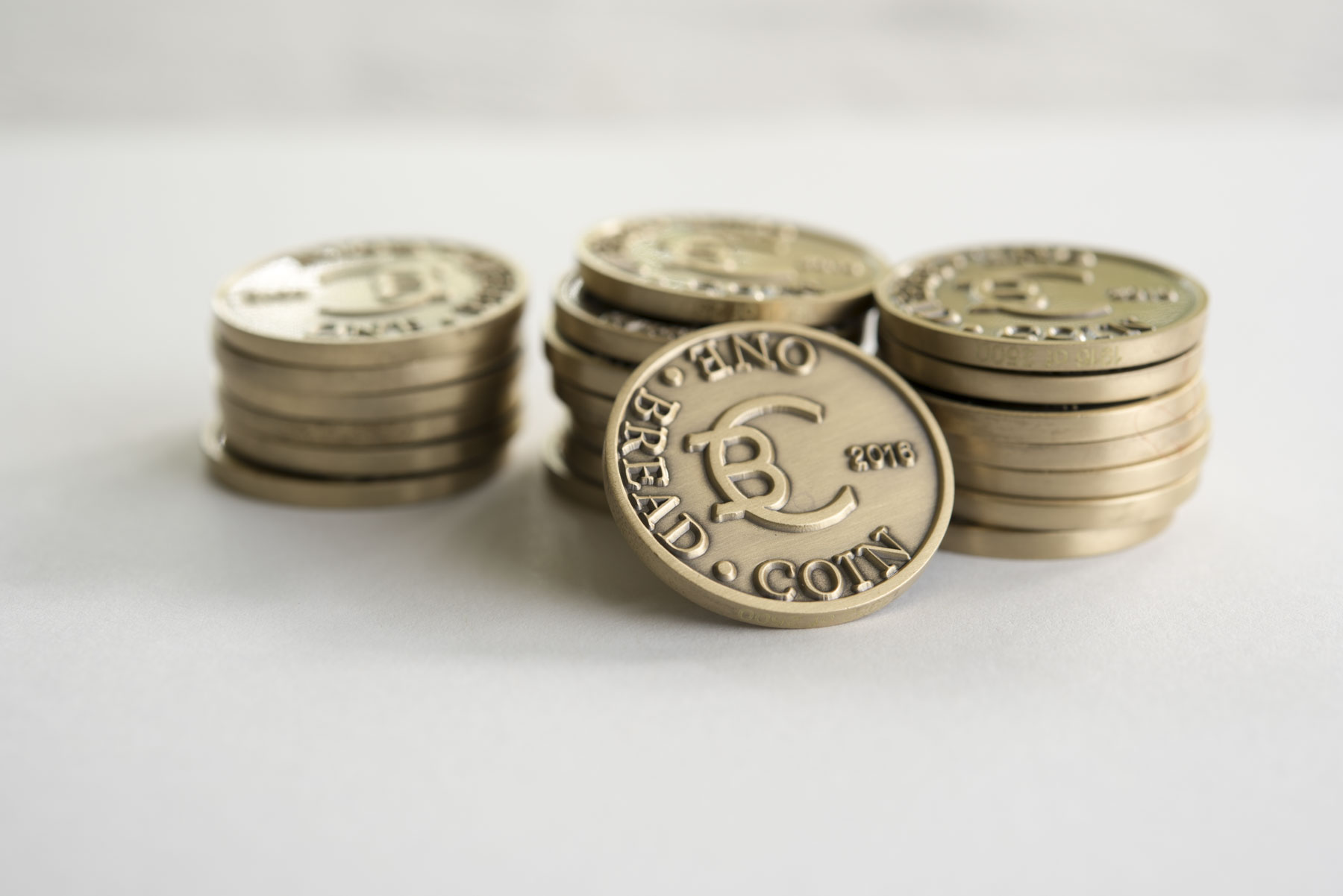
They minted actual coins – designed by a friend, each currently worth $2.50 in U.S. currency. They began developing partnerships with food vendors, and they decided to distribute the coins primarily through local nonprofits. With monthly memberships in hand, Breadcoin could commit a regular supply of Breadcoins to partner organizations each month.
How it works
The system at the heart of their work is straightforward: donors sponsor coins; nonprofits, individuals or other organizations distribute them; restaurants accept them as payment; and at month’s end, Breadcoin exchanges U.S. currency for collected coins, at full value.
Today, Breadcoin runs eight distinct programs, works with over 150 vendors across Washington DC, Maryland, Pennsylvania, Florida and Virginia, and redeems between 10 and 15 thousand Breadcoins monthly. They’ve even launched a partnership with two DC schools in Wards 7 and 8 to provide Breadcoins to kids during their birthday month so they can take friends or family out for a celebratory meal.
One beautiful aspect of the model is its ripple effect. Nonprofits that previously couldn’t offer food services can now provide meals to hungry families. Struggling businesses gain a steady stream of paying customers – and can even easily apply for a loan of up to $25,000 to be paid back over time in Breadcoins. People experiencing homelessness can access warm, prepared meals, as can families and children. Breadcoin is particularly useful for those without access to a kitchen, what Breadcoin calls a “kitchen gap.”
Neighbors who aren’t facing hunger are encouraged to use Breadcoins too. When everyone uses them, the potential for stigma is reduced and the ripple effect is amplified.
A culture of inclusion
What feels most important to Cary isn’t the scale of the operation, it’s the culture of welcome and inclusion they’ve built. It’s been critical to her that Breadcoin from the start “erase boundaries between who we tend to think of as givers and receivers.”
She saw the blurring of those lines early on at the Central Union Mission, and the Breadcoin team has been very intentional about maintaining that approach. Neighborhood Captains, many of whom are unhoused themselves, help connect neighborhood residents with Breadcoins. They’re now in a position to share their skills as connectors and give to others.
Why it works
Most people understand that hunger is a challenge in their own cities, but they don’t know how best to help. Breadcoin gives people a direct way to assist. People can even buy coins to hand directly to someone on the street in need of food. And hopefully, Cary says, they’ll eventually meet at the same table and dine together.
More fundamentally, the movement is a success because Scott and Cary and their team have paid careful attention to what works, and haven’t been afraid to abandon what doesn’t. Each iteration of her projects has built on lessons from the last. Each pivot has brought her closer to the core goal: creating genuine belonging for everyone.
The feast continues
Because Cary and Breadcoin remain laser-focused on the goal of welcome and belonging, they have long done what they call Flash Tables, which are pop-ups – beautifully set tables filled with delicious food, welcoming people to share a meal together in places in need of love. They see it as a continuum of care. “Here are some coins so you can go get a meal. That’s great, you solved your hunger issues right this minute. But wouldn’t it be amazing if the same meal could be eaten in the company of people who met you and cared about you and asked where you’re getting your next meal?”
Their team is exploring taking these Flash Tables all over the country with a national campaign encouraging people to set and gather at tables, to revive the ways the early church fed people in community.
Cary’s advice
Cary’s message to anyone seeking inspiration right now is one of connection: “Assume the best of people. Take the time to get to know them. Be willing to risk getting to know somebody you might not like, or want to be with, because you just never know until you actually hear somebody’s story.”
She also encourages us to focus on what we can do to help, and to avoid taking ourselves too seriously. As Cary tells herself, “I don’t have to solve everything. I just have to do my little piece.”
To learn how to support Breadcoin and get involved, go to www.breadcoin.org. You can also learn more about Cary’s SPACIOUS work at www.spaciousconsulting.org.
Joe Edwards: Joe's Loving Corner
Joe Edwards: Joe’s Loving Corner
Bringing the love to a busy corner in Northwest DC.
How Joe Edwards turns safe passage into a joyful experience every day.
“Knowing that those kids look forward to me coming, that motivates me each and every morning to get on my feet and get to the corner. I want to make sure those kids have a great start to their day.”
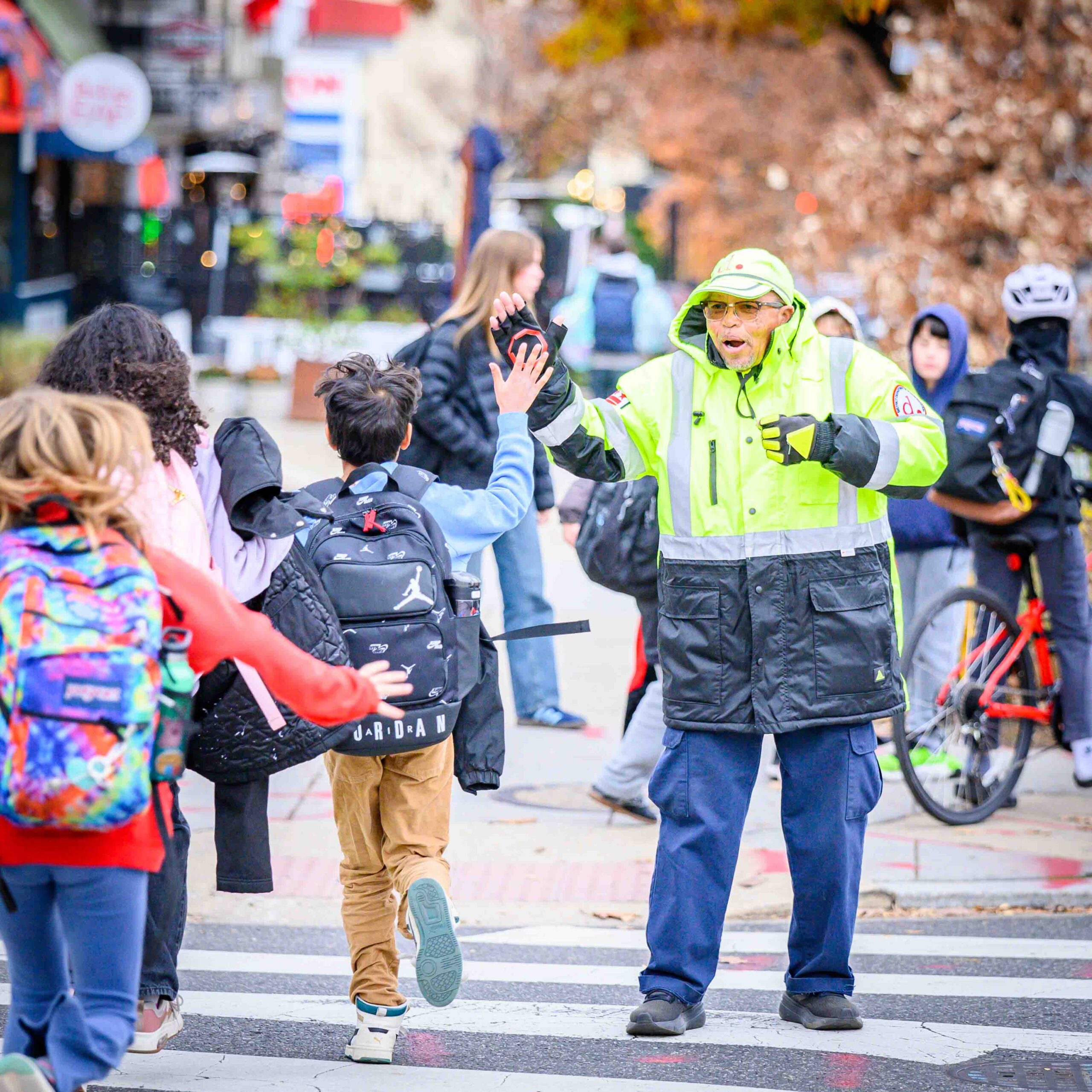
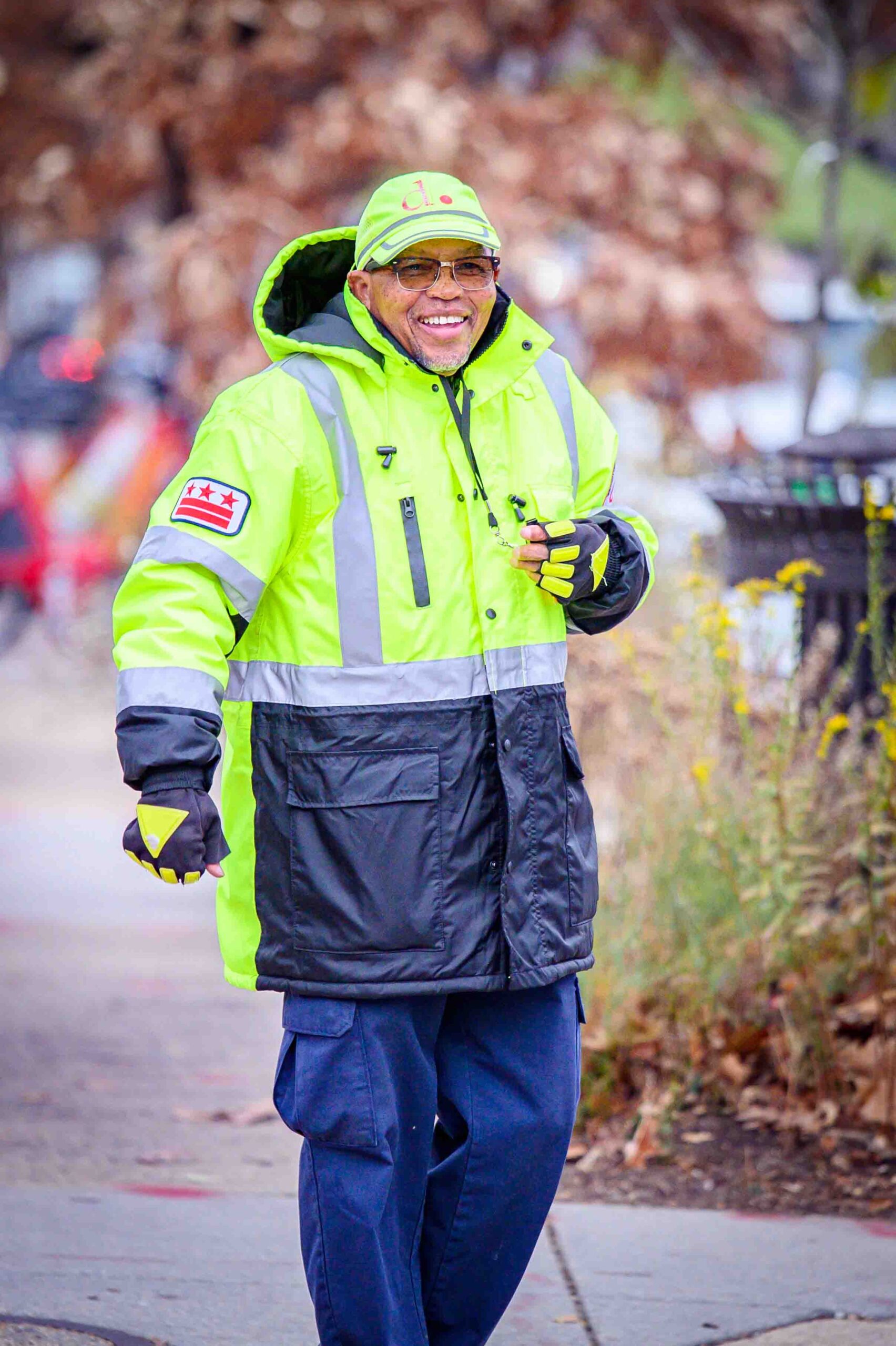
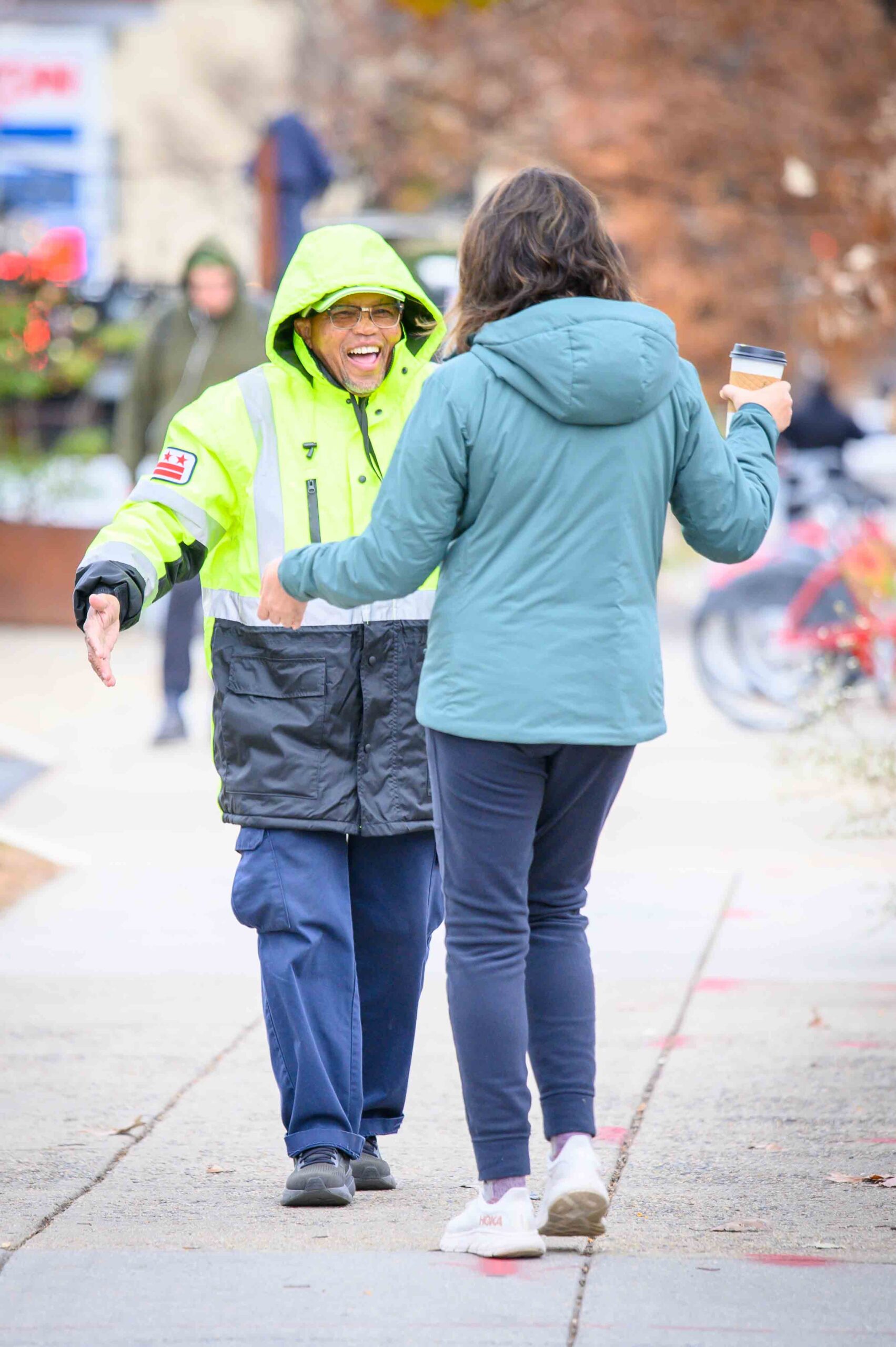
If you live anywhere near Connecticut Avenue and Fessenden Street in Northwest DC, you probably already know Mr. Joe Edwards. He’s the crossing guard with the contagious smile – the one who greets every child, parent, and passer-by with a wave, a fist bump, or a hug.
Rain or shine, sleet or heat, Joe is there for six hours a day, every day, helping families cross safely, and brightening the mornings of everyone who passes through his intersection. He often knows the parents and kids who come through his intersection by name, and somehow he manages to check in on them, offering an extra kind word when they need it.
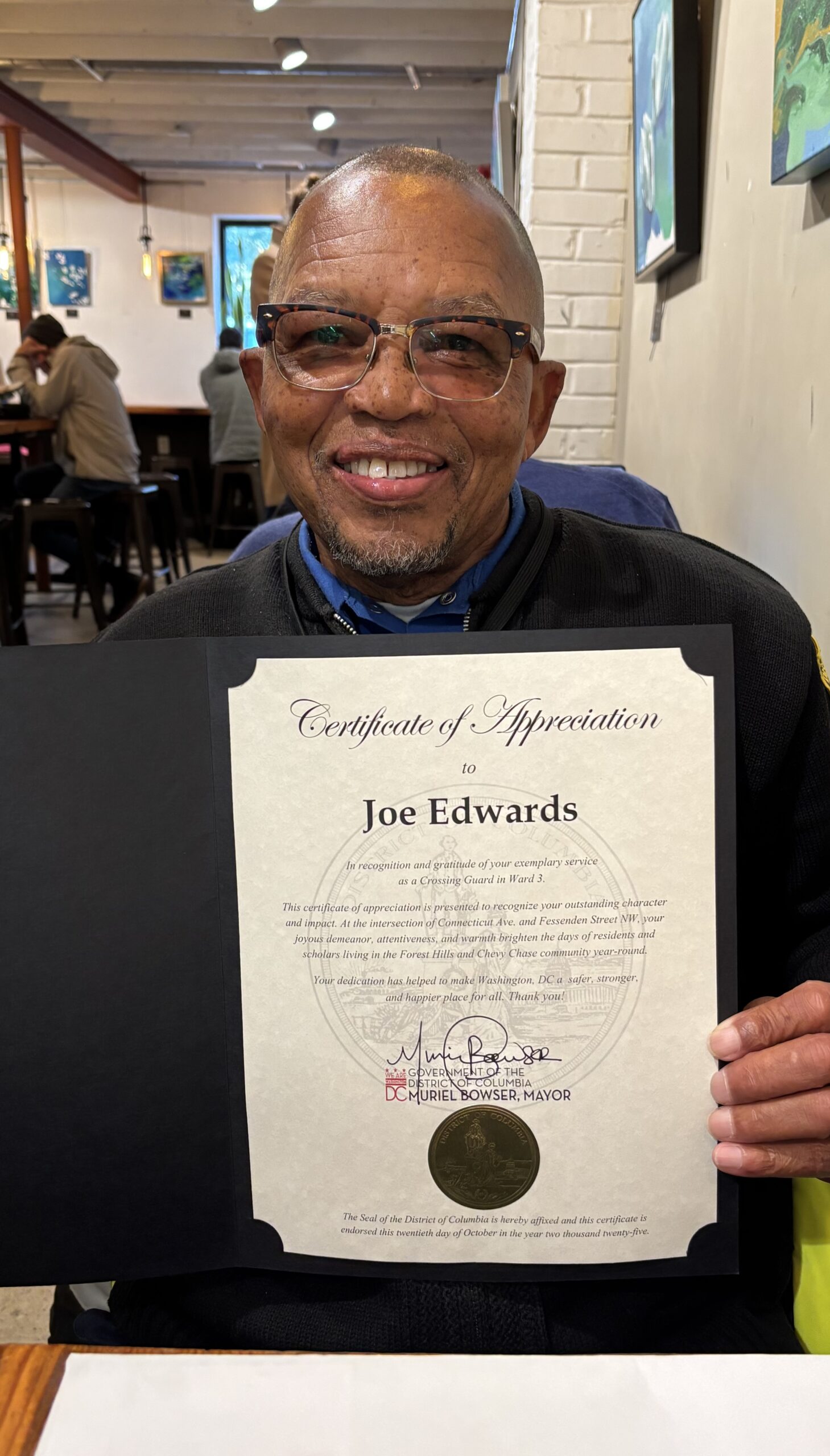
Recently, the Mayor’s Office recognized him with a Certificate of Appreciation for his “outstanding character and impact,” highlighting the way his “joyous demeanor, attentiveness, and warmth brighten the days of residents and scholars year-round.” Anyone who’s been lucky enough to cross Joe’s path knows that description couldn’t be more accurate.
A surprise passion
Joe’s journey to this role started in an unlikely place: a Nationals baseball game. Leaving the stadium one evening with a friend, he noticed a crossing guard handling the swirl of cars and crowds. “I thought, hmm, that looks interesting,” he says. “Maybe I could do that.”
He went home, applied through DC’s Department of Transportation, completed a month of training, and was soon assigned to his first – and only – post: Connecticut and Fessenden Streets NW.
“When I first started, I didn’t know a soul,” he recalls. “The parents didn’t know me, and I didn’t know them. But after about two months, they started warming up. Then the kids started warming up too. Once they started to feel my love and gravitate to me, I just took off like a rocket. I started to develop a passion for it.”
That “rocket” was powered by heart. Joe began to see his role as more than directing traffic or ensuring safety (though of course those remain top priorities), it became about creating connection, belonging, and joy. “I put my heart on my sleeve for those kids,” he says. “They feel my love.”
The corner that cares
After just four years, Mr. Joe has created a truly special intersection, and he already feels like a neighborhood institution to many. His corner is where elementary school students learn confidence and middle schoolers find kindness at the end of a long day. “Those Alice Deal kids can’t wait to get to me every afternoon,” he laughs. “They come to my corner for the love.”
His love often shows up in small acts. Like the time a mother approached Joe to share that her son, a quiet, shy boy carrying a green backpack, talked constantly about how much he liked “Mr. Joe.” Joe didn’t recognize the name, but kept an eye out. That afternoon, he spotted a boy standing alone by the curb. “I saw the green backpack,” he says, smiling. “I walked over and said, ‘Hey kid, you know me?’ He said, ‘I’ve heard a lot about you, you’re Mr. Joe.’ I said, ‘don’t tell me you’re John*.’ He said, ‘I am.’”
Joe’s eyes brighten as he recounts the story. “That was amazing. I didn’t even know him, but I’d been making his day without realizing it.” Now Joe keeps an eye out for John to give him a high five and an extra boost of joy every time he crosses.
Another neighborhood family shared that “My girls and I consider Mr. Joe a part of our family. He greets everyone with genuine compassion and a smile that instantly lifts your day. His kindness and consistency make him a true fixture in our neighborhood – the kind of steady, caring presence that reminds us what it means to build a village around our children.”
Grace under pressure
Joe’s intersection is no easy post. Cars fly up and down Connecticut Avenue and make harried turns to and from Fessenden, dozens of pedestrians cross every hour, and tempers flare. And yet Joe stays unshakably calm. “It’s hard,” he admits. “But I just move my attention toward the kids. I don’t let angry drivers ruin my day.”
The mindset, he says, is a choice he makes every morning. “If the kids got to come out, I’m coming out with them. Every season – rain, snow, sleet. And I’m going to do it with a smile.”
Drivers sometimes lose patience. One once shouted, “Why’d you stop me?” Joe simply pointed to the dozen kids waiting to cross and kept going. “I just let it roll off,” he says. “I’ve got more kids to deal with. And not one of them has ever seen me have a bad day.”
Faith, purpose, and showing up
When asked what keeps him motivated, Joe is clear: “Every day I come out here for a reason, and that reason is those kids and those parents.”
His advice to others struggling to find motivation right now? “Get up and go about your day the way you do. And leave it in God’s hands,” he says. “Everything is a temporary setback. God’s going to give you a door to walk through.”
Joe’s corner
The way Joe shows up every day creates waves of positivity that reach far beyond his corner. Parents trust him, kids light up when they see him, and neighbors always leave his corner smiling.
He reminds us that it doesn’t take grand gestures to make the world a better place. Sometimes it just looks like consistency, kindness, and heart – shared with others every day.
“I’m going to do my job with a smile,” Joe says. “And each and every day I’m going to be the best that I can be. Every day.”
To Joe, it’s simple: love people where you are, and make your corner of the world a little brighter.
* Name has been changed for privacy.
Elizabeth Workman: Goods For Good
Elizabeth Workman: Goods For Good
Meeting the moment with kindness.
How Elizabeth Workman and Goods For Good are connecting neighbors to meet real needs, one small act at a time.
“We can’t solve everything. But we can fold the clothes, cook the meals, deliver the toys – and in doing these small things, make the world a little better.”
When Elizabeth Workman talks about Goods For Good, her voice carries the kind of steady optimism and clarity that comes from doing, without hesitation. What started as a small family yard sale has grown into a community-wide effort that has provided over 35,000 meals, countless essentials, and immeasurable comfort to people across Washington, DC.
But this is not the story of a grand plan. It’s the story of listening, adapting, and saying “yes” to whatever is needed next. That same instinct has guided Elizabeth throughout her career in the nonprofit and social service sectors – when you see a need, meet it.
From yard sale to community connections
It all began with a family project: a 50-cent yard sale in 2008 where Elizabeth’s children chose local nonprofits to receive the proceeds. Friends and neighbors loved the idea and began dropping off their own items to sell. When the Workman house had filled to bursting, the family organized a full-scale rummage sale.
That single event raised more than $5,000 and sparked a question from Elizabeth’s daughter: “What if we had more space and more time, could we raise more money?” It seemed likely that the answer was yes, and so they tried it.
Twice, Elizabeth tracked down large spaces near her home, worked with the owners to utilize them for free or reduced rent, rallied volunteers, and held massive community sales – raising an astonishing $32,000 for two local nonprofits. Elizabeth was prepared to continue this effort, but in 2020 the pandemic made these gatherings impossible.
Following the need
The organizations Elizabeth and her children had supported through the rummage sales were suddenly facing new challenges. Shelters where children once played together in shared spaces now needed individual games and toys for separate rooms. Food programs designed to provide dinner were now responsible for feeding families three meals a day.
So, Elizabeth jumped in to help fill the gaps: collecting board games and puzzles, then cooking extra meals to drop off where food was short. Soon, friends and neighbors joined in, and Goods For Good evolved from occasional fundraisers into a dynamic network of community care with Elizabeth serving as an all-purpose intermediary.
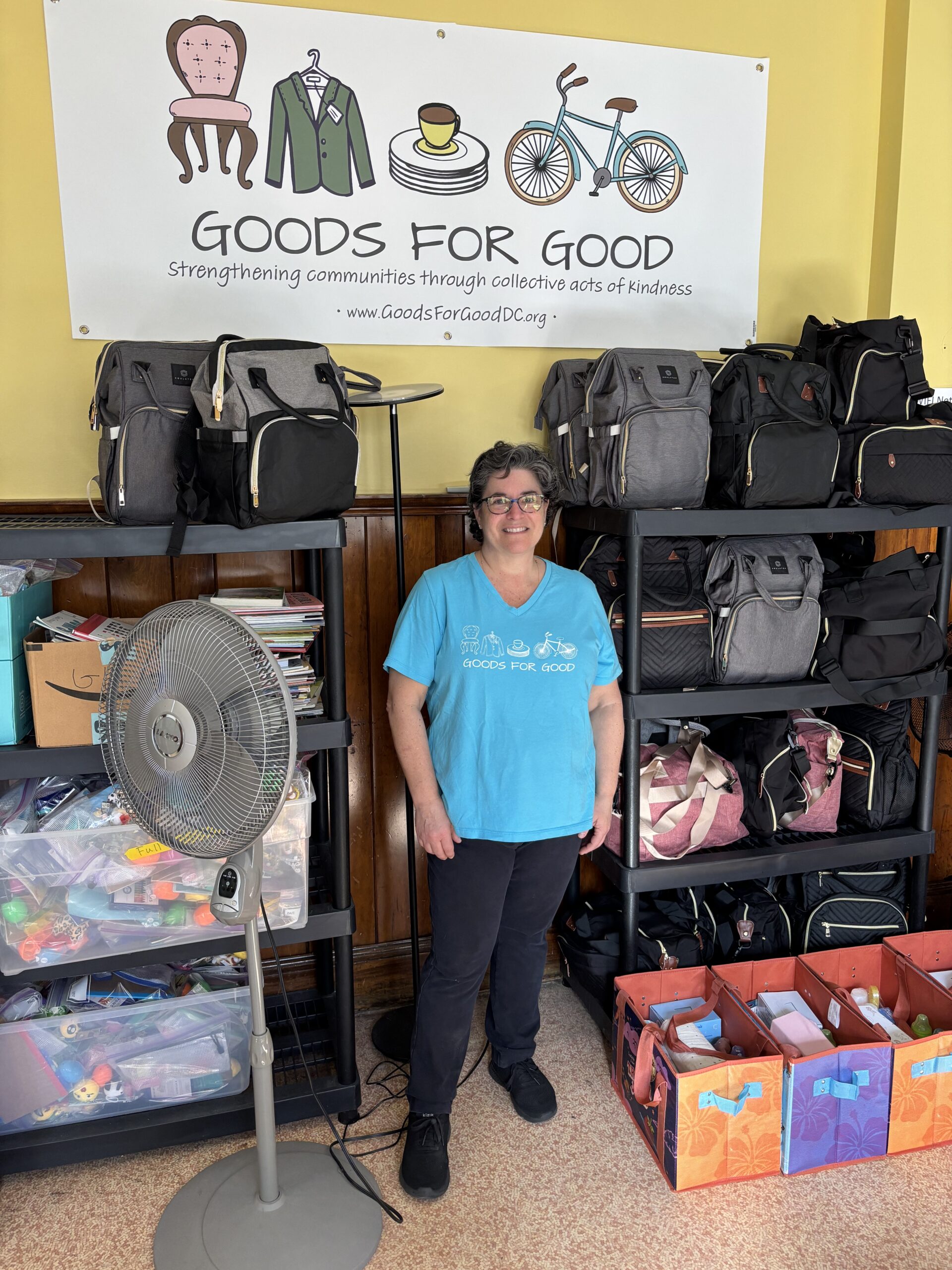
Soon Elizabeth’s home was once again overflowing with donated goods, and she realized it was time to find the project its own space. She reached out to the Director of the Episcopal Center for Children (ECC), whose large building in the heart of the neighborhood had caught Elizabeth’s eye. After several conversations, ECC committed its support to this community effort, and generously offered to provide a large space at greatly reduced rent. Since then, Goods For Good has filled the space with donations, volunteers, and a constant positive energy.
Goods For Good now works with over 50 local nonprofit partners – connecting volunteers and donations to the ever-changing needs of neighbors across Washington, DC. “We never start a project based on what we think people need,” Elizabeth explains. “We listen. We let our partners and communities guide our work.”
Their annual soup drive has become a beloved neighborhood tradition, with volunteers preparing hundreds of servings of homemade soups, stews, and chilis each winter (nearly 4,000 to date!). Refrigerators at the many homes serving as Goods For Good donation drop-off sites are often filled to the brim with labeled containers ready to be delivered. “It’s not just about the food,” Elizabeth says. “It’s something warm, nutritious, made with love. It’s a message that says: we see you; we care.”
Another volunteer favorite is the ongoing “birthday in a box” effort, through which volunteers create birthday kits for children living in shelters. These beautiful packages are filled with birthday treats, gifts, decorations, and goody bags for siblings. Elizabeth works directly with partner shelters to learn about each child and their family to help create the truly special birthday celebration every child deserves.
While the organization got its start with in-kind and financial donations from friends and neighbors, word quickly spread about the impactful work they were doing. Goods For Good now receives funding from one foundation grant, a number of small family foundations, and many, many generous individual donors. They continue working to grow and diversify their funding sources, and they spread the word through a monthly newsletter, social media, and their website.
The power of small acts
When asked what has been most meaningful for her in this work, Elizabeth doesn’t talk about grants or numbers at all. She tells the story of Kesha, a young refugee from Afghanistan who arrived in DC with her mother and six siblings after fleeing unimaginable violence.
At a Goods For Good clothing and toy pop-up, Kesha and her family found more than material comfort – they found potential. The younger children played with musical toys and Kesha gathered new clothes – clothes that would enable her to finally return to school. For perhaps the first time since they fled their home in the dark of night, the family could envision a hopeful future for themselves.
Elizabeth had to step around the corner to collect herself. “Seeing it through their eyes and realizing how something so simple could restore joy, it was overwhelming,” she says. Moments like this are what keep her going. She acknowledges that Goods For Good can’t solve the big issues out there facing the world, but she knows that every single life they touch is changed for the better.
Why it works
When Elizabeth is asked why Goods For Good has thrived, she doesn’t hesitate: “Our volunteers are amazing.”
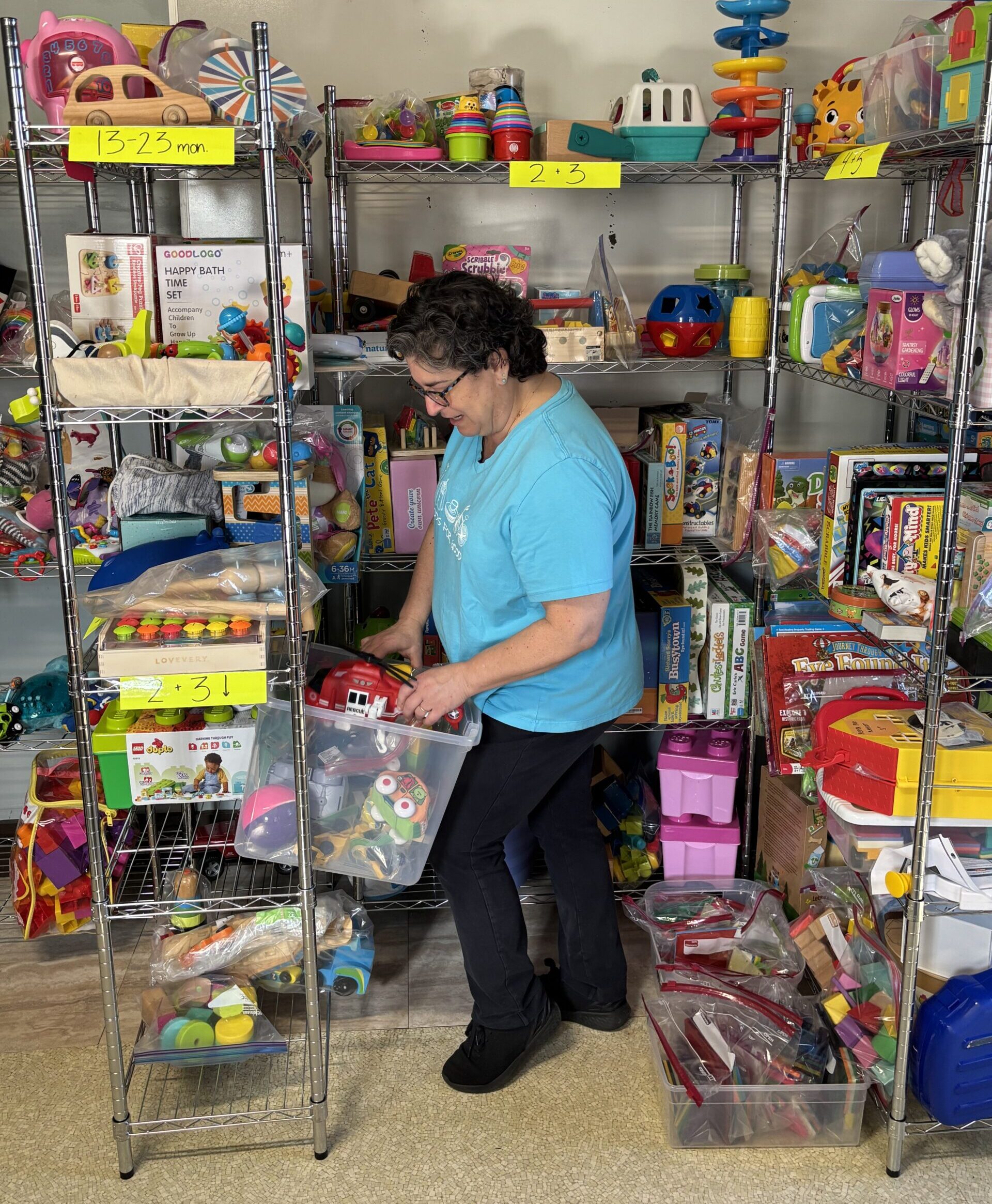
Every new project draws a wave of people eager to help. They cook, fold, sort, package, drive, and deliver – and in doing so, remind each other that goodness still exists. “On the hardest days,” Elizabeth says, “they walk through the door with their positive energy and make my heart soar.” The Goods For Good space is often filled with busy volunteers turning the chaotic piles of donated items into neatly organized shelves of clean toys, bundles of toiletries, and beautifully folded and packaged bags of clothes ready for delivery.
Elizabeth believes in keeping things simple. “Don’t look too far ahead,” she advises. “Just take one challenge at a time. If you try to tackle everything at once, you’ll freeze. But if you keep showing up, the next step will reveal itself.”
Elizabeth’s advice
Elizabeth’s message to anyone seeking inspiration right now is to “Shake off the bad news and volunteer somewhere. You’ll feel the energy of others trying to make a difference – and you’ll remember that you can too.”
This holiday season you can help provide families with the essential tools they need to cook, gather, and celebrate together by donating a new set of new pots and pans (example set here). Learn more about Goods For Good at goodsforgooddc.org.
Judy Ingram: NW Community Food
Judy Ingram: NW Community Food
Cultivating community in Northwest DC – how Judy Ingram and NW Community Food are nourishing hearts and bodies.
“Do the work and hope will follow.”
When Judy Ingram talks about NW Community Food, she describes it as “an improbable miracle of sorts.” Somehow, the math always works out – enough food shows up, enough volunteers arrive, and hundreds of families leave with groceries, cleaning supplies, and – hopefully – some new friends.
But miracles, as it turns out, require a lot of hard work, organization, stubborn optimism, and the right kind of leadership – the kind that refuses to fail.
A seed of purpose
Judy’s path to this work started early. As the daughter of a long-time volunteer coordinator for Travelers Aid Society, community service is in her blood. Her commitment to food security took root when she joined the gardening club at Murch Elementary School, where her children were students. Digging in the dirt, watering the plants, and harvesting the rewards proved to be deeply satisfying – and cultivated a newfound interest in food security and preventing food waste.
That interest also offered a sense of meaning that her day-to-day work lacked, and it stayed with her long after her kids moved on. She began volunteering with Food Rescue US, and later with Ward 3 Mutual Aid, shuttling food from grocery stores to neighbors in need during the pandemic.
“I’m ashamed to say it came as a shock to discover how many people just half a mile away from my comfortable life were struggling,” she admits. At the time, the hunger rate near the University of the District of Columbia (UDC) was a staggering 35%. The scale of need, and the inefficiency of delivering food door-to-door, sparked an idea. Most families were seeking similar essentials. What if, instead of spreading volunteers thin, there was one central place where families could pick up what they needed?
By turning a challenge into a solution, NW Community Food was born.
Building something from scratch
Judy partnered with a fellow activist who had an existing nonprofit organization that could serve as a fiscal sponsor. Together, they worked with the local Advisory Neighborhood Commission to approach UDC about using one of the university’s vacant spaces. UDC eventually offered a rent-free location to house the new pantry. “It was a tremendously generous act by UDC,” Judy says. That act of generosity – spurred by months of advocacy – set everything else in motion.
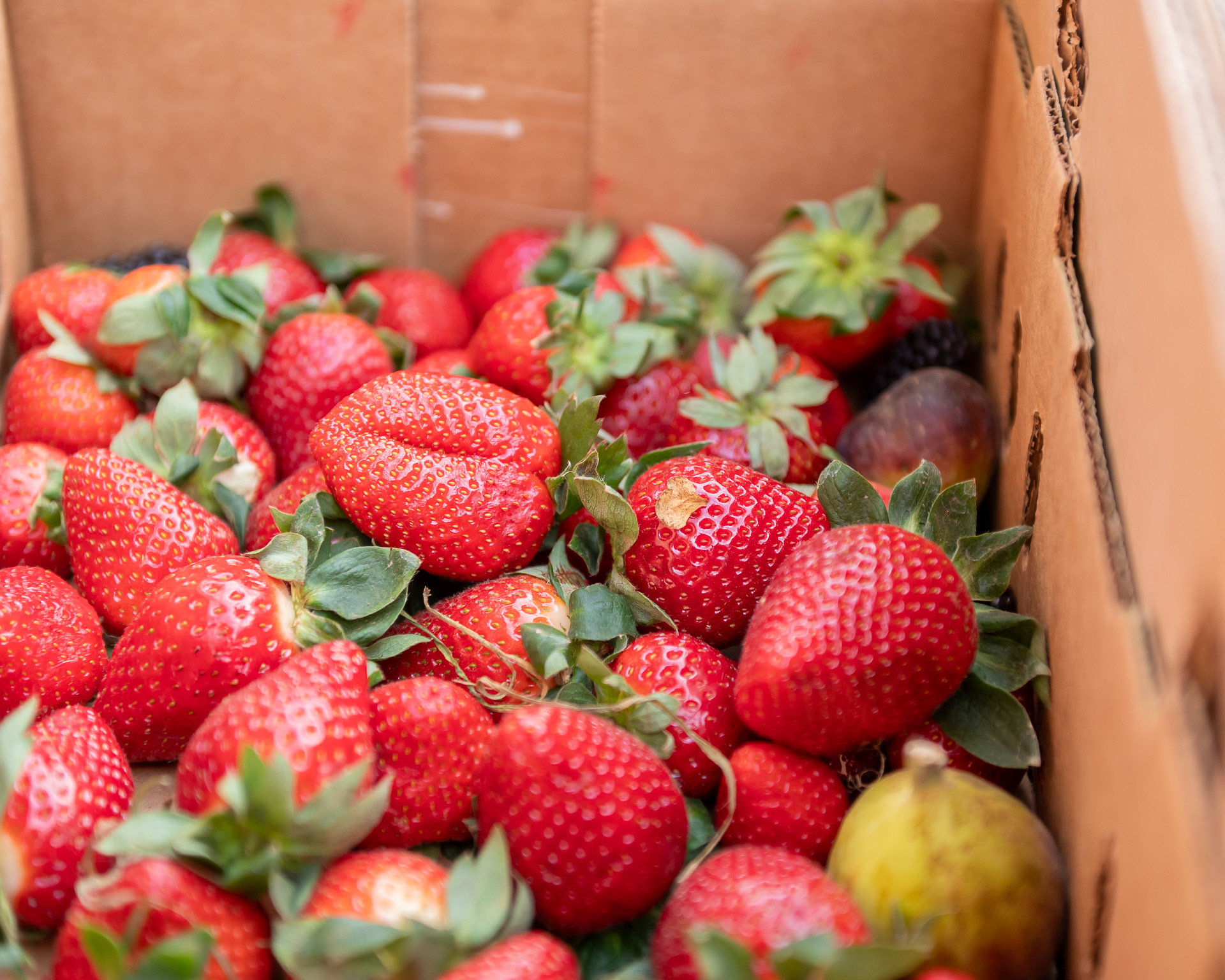
Judy’s original goal for the pantry was ambitious: to provide cleaning supplies and fresh produce to 100 families a week. She started by calling on the connections she had built over the years: friends, neighbors, local schools, and faith communities. This outreach generated enough funding to purchase 50 weekly shares from a community-supported agriculture farm and a steady supply of essentials. As awareness about the pantry grew, so did the support.
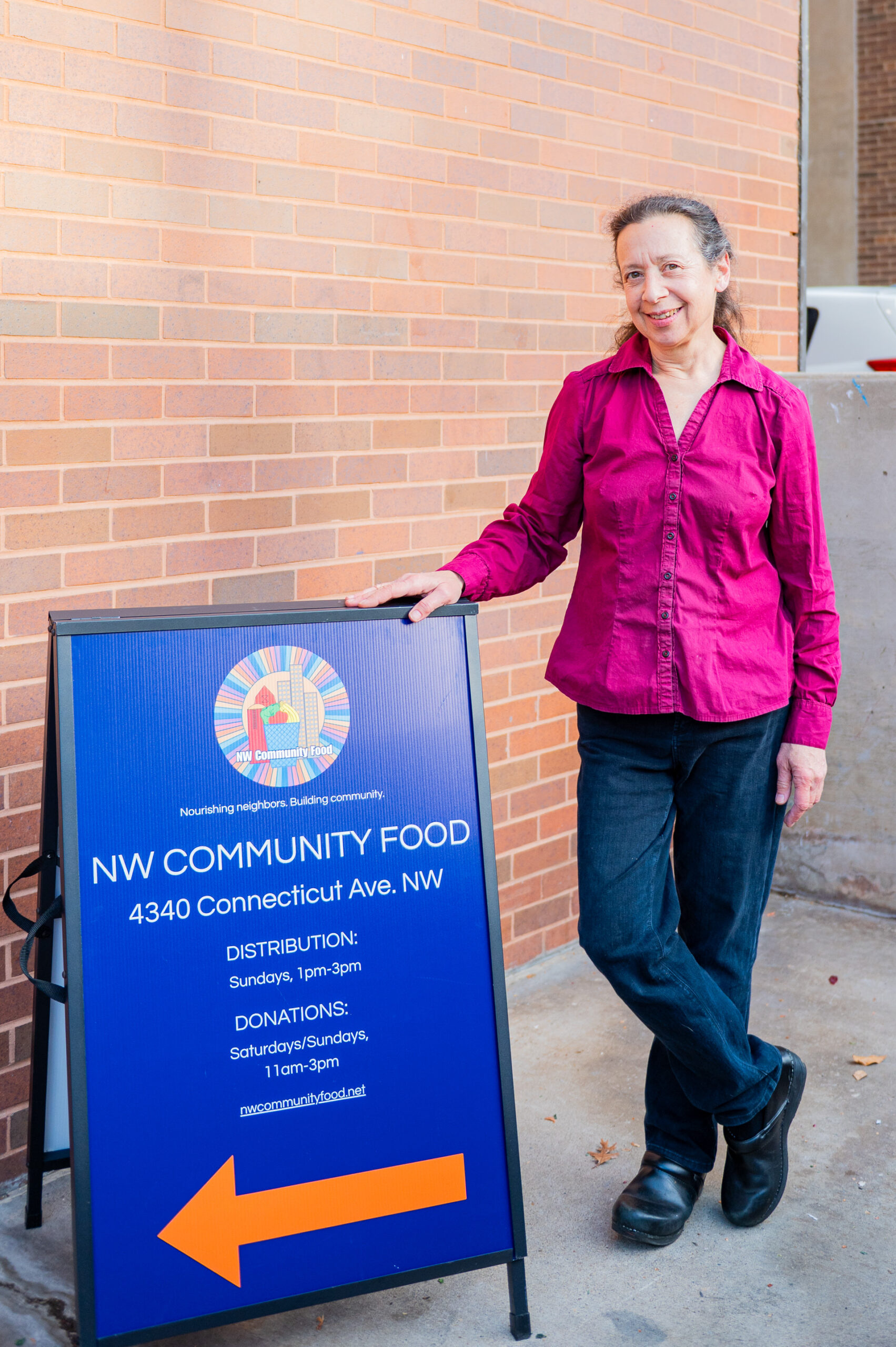
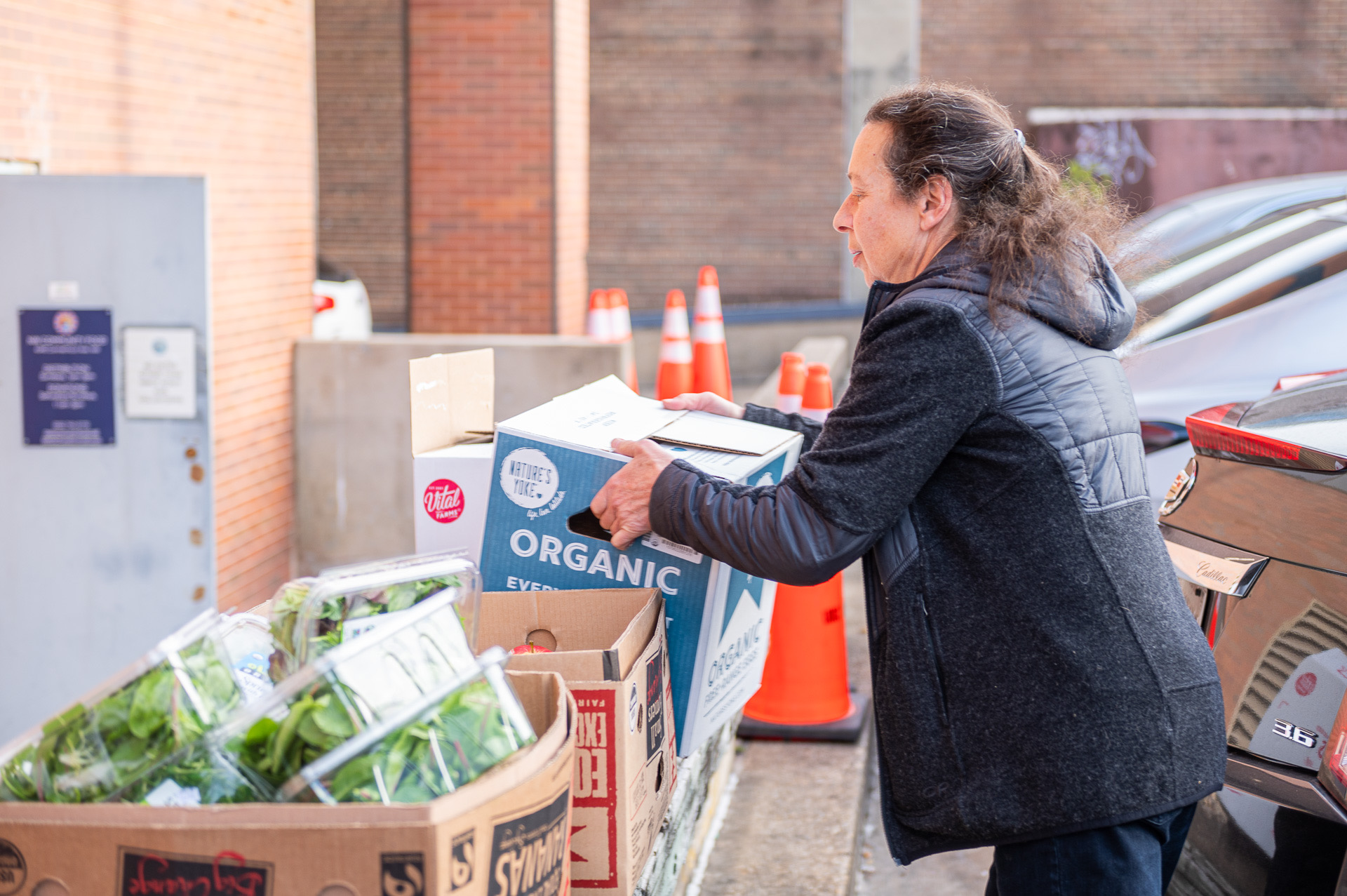
The pantry is a hands-on effort. Today it takes over 100 volunteers to make the pantry function each week. They collect and organize donations, sort produce, portion food, set up tents and tables, and make home deliveries to those who can’t make it in person.
Judy describes the pantry as a “seat of the pants” operation. But in listening to her, I would call it resourceful and efficient. For two years, the pantry operated without its own formal nonprofit status, a step Judy took only when it became necessary in order to receive grants and partner with larger organizations like the Capital Area Food Bank.
Turning obstacles into opportunity
The pantry’s biggest test came in early 2025 when UDC informed Judy that the pantry’s space would soon be reclaimed for university use. By then, the pantry was serving more than 300 families weekly. Closing wasn’t an option.
The news might have crushed a less determined leader, but Judy refused to consider the possibility of failure. It was an existential threat that led to what Judy calls “a virtuous circle,” forcing the team to raise the pantry’s profile and kick fundraising efforts into high gear, deepen their commitment to transparency, and learn to “ask boldly” for help. Once again, UDC stepped up, providing a new home for the pantry. Other supporters followed, providing generous donations that enabled improvements to the pantry’s operations and guest experience.
The ability to turn setbacks into catalysts has defined Judy’s work. She might not describe it this way herself, but it’s clear that Judy sees every challenge as a hidden opportunity – often leading her somewhere unexpected.
A different kind of community
The sense of belonging Judy has created is what makes NW Community Food truly special. Some volunteers are also guests, spending time “on both sides of the table,” which reflects Judy’s cultural vision for the organization. On any given Sunday, you’ll find people swapping recipes for unfamiliar vegetables (how does one prepare kohlrabi?), sharing housing leads, or simply catching up like old friends.
The pantry’s benefits flow in all directions. Having built such a welcoming community gives Judy a deep sense of satisfaction. “We didn’t want this to be just a place to come and get food. We wanted it to be a place where people come and they don’t draw help just from us, but from each other.”
Judy also notes that “the greatest successes are the ones that you don’t really see” – because families stop coming. They no longer need food support, though they often remain friends.
Why it works
Judy attributes much of the pantry’s success to proximity: “We have a deep well of need in a pretty affluent community. In fact, there are still plenty of untapped volunteers and donors right here in the neighborhood.”
But watching her work, it’s clear that the pantry thrives not just because of geography, but also because of Judy’s relentless creativity, determination, and ability to make something out of nothing. She spots the potential in every connection, every space, every obstacle.
Her advice to anyone looking for inspiration right now is simple – and lived: “You keep putting one foot in front of the other. You will find stuff that needs to be done, and that hopefully will give you some energy. And ultimately the hope will come.”
To donate, volunteer or learn more about NW Community Food, click here.
Jenn Hwu: Strength in Numbers DC
Jenn Hwu: Strength in Numbers DC
Count her in.
How Jenn Hwu and Strength in Numbers DC are making a difference – one student at a time.
“Don’t get overwhelmed by thinking you need to do something big for it to matter. Tiny differences add up.”
In the hallway of a busy DC elementary school, a student with significant social-emotional challenges was having a tough day. Being pulled out of class for a special math session triggered a visceral reaction — until Officer Ervin, the school’s beloved security guard, stepped in. With her gentle presence, she “whispered” the child back to calm.
After a successful session, tutor Jenn Hwu suggested they make something together to thank Officer Ervin. Using a compass — Jenn can find a way to work math into anything — they drew a circle and a heart, wrote “Thank you, Auntie” in careful cursive, and taped a Jolly Rancher to the card. When they handed it to Officer Ervin, she was visibly touched. “It was a little thing,” Jenn said, “but it was one of those moments that builds connection for all of us.”
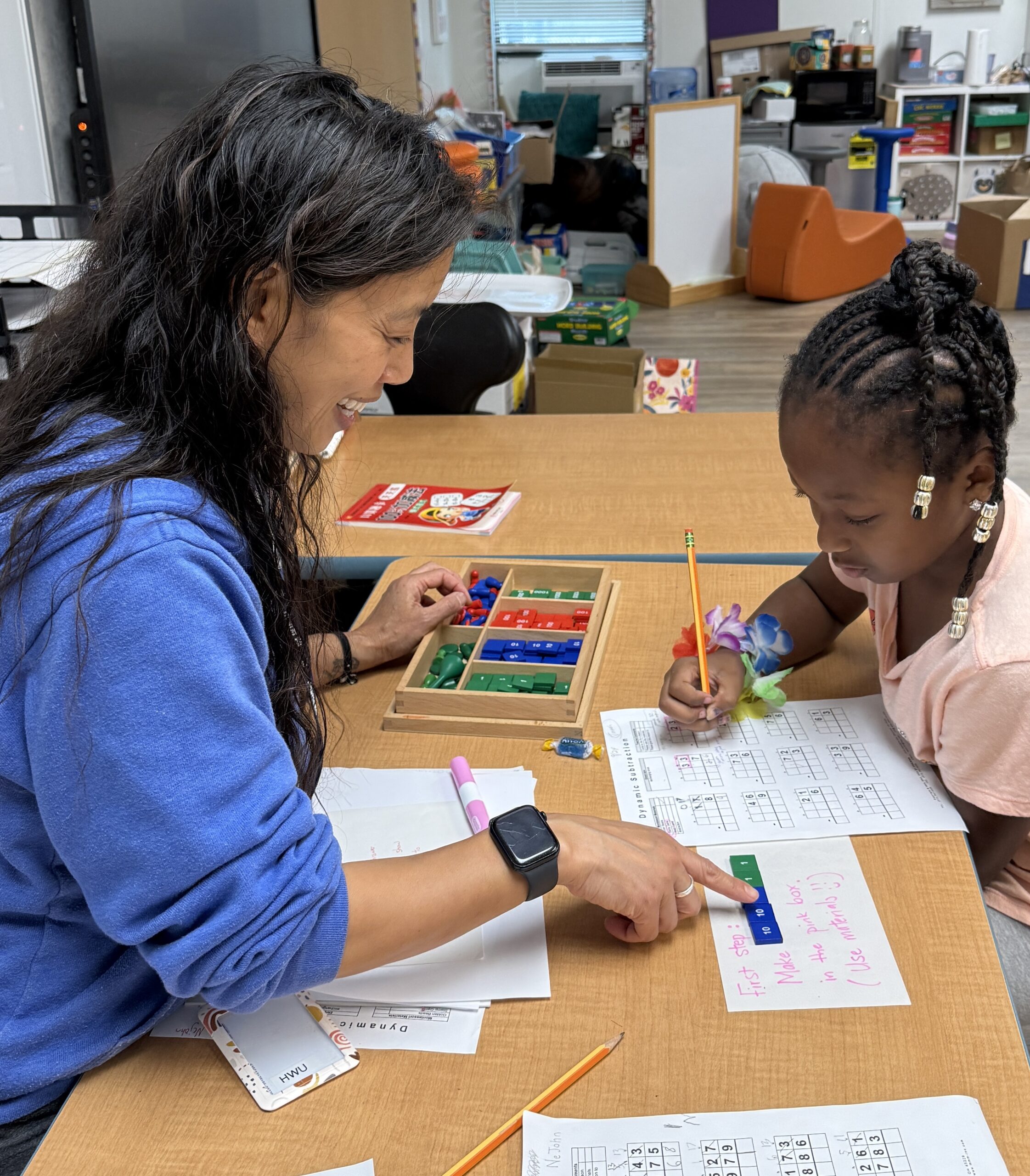
Jenn is the founder of Strength in Numbers DC, a tutoring program that works with kids in Title I* DC public schools. What began in 2021 as a reaction to drastically uneven pandemic learning experiences has grown into a small and deeply impactful nonprofit. “Some kids had tutors, some were back in school quickly, and some just… disappeared from learning spaces,” Jenn recalled. As a long-time educator in the DC area, Jenn saw an opportunity to use her unique skills to address the learning needs of kids who lacked access to other resources.
The program began at Takoma Elementary School and has since moved into other schools with similar needs. At first, Jenn’s focus was solely on students who were underperforming in math due to no fault of their own. Over time, Jenn also noticed “overperforming” students whose talents weren’t being nurtured because schools lacked the capacity. “There was a really gifted 5th grader at one of my schools who was testing off the charts. His experience made me realize I needed to expand my mission a little bit,” Jenn explained. She now supports students who are referred to her for a variety of different needs.
When she decided to launch Strength in Numbers DC, Jenn had never applied for a grant before. She braced herself for a lot of rejections, noting “you hear stories of people who apply for 30 grants before they get one.” But her very first application — to a small foundation called the Wild Gifting Project — came back with a yes. “They were building the plane as they flew it, just like I was, so it was the perfect partnership.”
Jenn says that when she was designing the program, “I asked myself three questions: Where can I have the biggest impact? Who can I partner with? And what do I do really well?” That clarity has kept Strength in Numbers DC grounded in its mission and niche. She also established a Board of Directors with a wide range of experience, talents, and connections to shape the direction of the organization.
Jenn feels most rewarded by the relationships she’s built with students and teachers alike. “The chance to touch base over and over again, to go back and talk to a teacher who taught a kid two years ago — it helps me understand the child’s whole story,” she said. “It’s meaningful to everyone involved that somebody’s still looking out for this student.” Jenn’s love for her students, and the respect she has for the educators she collaborates with, comes through in volumes when she talks about her work.
Part of the program’s success lies in staying intentionally small. By working outside the formal DC Public Schools system, Jenn can collaborate with educators on her own terms. “I’m not trying to scale up to something big,” she said. “That allows me to relieve pressure from DCPS teachers, while knowing everybody is collectively stronger on behalf of the kids.” Jenn is able to focus on real impact for individual kids — and also maintain balance in her own life so she doesn’t burn out.
When the work feels overwhelming, Jenn focuses on keeping things in perspective. “I know I won’t fix the entire system,” she said. “But I also know this isn’t just a bandage. So I ask myself: what can I do today? What can I plan for in the next couple months? What does this student need next year?”
Her advice to anyone looking for inspiration is simple: “Don’t get overwhelmed by thinking you need to do something big for it to matter. Tiny differences add up. Do those things — and then let yourself appreciate the difference you made.”
Want to support the amazing work Jenn’s doing with Strength in Numbers DC? You can learn more and donate here.
* A DCPS school is eligible to become a Title I schoolwide program if the poverty rate of the student body is 35% or more.
The Inspiration Series: Good things are possible
The Inspiration Series: good things are possible
Lately, it feels like the news is one gut punch after another. In conversations with friends, neighbors, and clients, I’ve realized that many of us are feeling powerless and ineffectual.
This is the motivation behind The Inspiration Series: short, true stories about everyday people doing inspiring things. Not superheroes. Not billionaires. Just neighbors, teachers, friends — people who saw a need and did something about it.
My hope is that a steady stream of positive stories can remind us all that we do have the power to make the world a better place.
Keep an eye on this space for routine posts, and please spread the word!